MetalJazztag:www.metaljazz.com,2024://12024-04-19T21:17:35ZWords About Music by Greg Burk and FriendsMovable Type Pro 7.9.1Links: L.A. performances (4/19/24).tag:www.metaljazz.com,2024://1.18612024-04-19T21:01:21Z2024-04-19T21:17:35ZThis week: Munyungo Jackson, Daniel Rotem, Deathchant/Danava, Billy Childs, Keyon Harrold, Herbie Hancock, Elliott Caine, Encirclement, Atoll, Throwaways, Hear Now Fest, Nakatani-Shiroishi, more.metalhttps://www.metaljazz.com
Select chronological listings.
* The World Stage in Leimert Park has Friday 8:30pm PT (and sometimes other days) in-person presentations with occasional simultaneous live streams of righteous jazz; keep up with the schedule here. Donations encouraged here. Fri. April 19: percussionist to the stars Munyungo Jackson. Fri. April 26: World Stage Big Band. Fri. May 3: bassist Ben Williams. Fri. May 10: bassist Al Threats. Sat. May 11, 7:30pm: Kenshaka Ali. Fri. May 17: drummer Brandon Sanders. Sun. May 19, 1pm: L.A. Jazz Society's Vibe Summit. Fri. May 24: saxist Charles Owens. Fri. May 31: Cosmic Vibrations featuring Dwight Trible. Fri. June 7: Mika 9 of Freestyle Fellowship. Tues. June 11, no charge: Founders Day featuring Kahil El'Zabar & David Murray. Fri. June 14: Katalyst. Fri. June 21: saxist Justo Almario. Fri. June 28: vocalist Arnae Batson.
* The LAX-area bar Sam First offers 7:30pm and 9pm jazz shows, in person and sometimes STREAMING. Fri. April 19: unusual atmospherics from saxist Daniel Rotem Group. Fri. & Sat. April 26 & 27: drummer Joe LaBarbera Quintet. Tuesday Happenings feature jams led by top local artists. Wed. May 8: Larry Goldings & John Sneider. Thurs. May 16: pianist Joshua White Quintet with Nicole McCabe, Chris Speed, Billy Mohler & Anthony Fung. Fri. & Sat. May 10 & 11: freaky keyboardist Adam Hersh. Sat. May 25: Andy Milne & Unison. Fri. May 31: drummer Roy McCurdy Quartet. Look here for full schedule and options.
* McCabe's Guitar Shop in Santa Monica has jazzy stuff now and then. Fri. April 19: guitar master Albert Lee (sold out). Sat. May 18: Scott Amendola & Sticklerphonics. Calendar here.
* Frogtown's adventurous avant/modern/world club Zebulon offers surprises from the present and past. Fri. April 19: great bill featuring pounding, ripping old-skool rock from L.A.'s Deathchant, plus heavy prog trips from Portland's Danava. Sun. May 5: Setting, Jeff Parker. Sun. May 12: Arto Lindsay. Wed. June 19: Saccharine Trust performs "Paganicons." Full calendar here.
* Catalina's Jazz Club in Hollywood hosts mostly mainstream jazz and singers, but there are exceptions. Fri. & Sat. April 19 & 20: always reliable keyboard spark from Billy Childs Trio. Fri. & Sat. May 3 & 4: Stanley Jordan. Fri. May 31 & Sat. June 1: trumpet great Arturo Sandoval. Tues. & Wed. June 11 & 12: pianist Adam Wakeman's brilliant Black Sabbath interpretation Jazz Sabbath! Fri.-Sun. June 14-16: Poncho Sanchez. Full calendar here.
* The Jazz Bakery sponsors live shows at mostly Westside venues; view its calendar here. Sat. April 20: trumpeter-singer Keyon Harrold at Westwood's Nimoy. Sat. April 27: pianist Fred Hersch at Little Tokyo's Aratani Theater. Sun. May 5: explosive pianist Jacky Terrasson at Santa Monica's Moss Theater. Sat. May 11: singer Carmen Lundy at Culver City's Kirk Douglas Theater. Sun. May 19: big event with abstract piano great Vijay Iyar Trio at Santa Monica's Moss Theater. Sat. June 8: Steve Lehman Trio featuring Mark Turner at Westwood's Nimoy. Sat. June 29: saxist Chris Potter at Westwood's Nimoy. Sat. Sept. 7: singer Jazzmeia Horn at Westwood's Nimoy.
* Downtown's Disney Hall presents some jazz and events of note beyond classical. Sat. April 20: tonight's Herbie Hancock performance promises a glance back to the keyboardist's jazz & funk roots with a stellar band featuring young alto saxist Devin Daniels, veteran bassist James Genus, drummer Trevor Lawrence Jr. and the always involving tenor saxist Chris Potter; not quite sold out. Fri. Oct. 11: Jason Moran. Tickets here.
* Sun. April 21: The ensemble of mainstream jazz trumpeter Elliott Caine plays The York, a big bar in Highland Park, from 8 to 10pm, no cover. Website here.
* 1720 (east of downtown, south of the 10 freeway) books metal etc. Sun. April 21: Metal Sunday -- wondrous bursts of barely contained chaos from L.A.'s Encirclement, plus Pagan Ritual, more. Sat. April 27: Korpiklaani. Sat. May 11: Born of Osiris. Sun. May 19: Decapitated. Fri. June 7: Gatecreeper. Thurs. June 20: Dreadworm. Wed. July 24: Fallujah. Sat. Sept. 21: Autopsy, Repulsion. Full calendar here.
* Knucklehead in Hollywood has metal DJs and live music. Sun. April 21: complex extraterrestrial-themed sludgery from Phoenix's Atoll, plus Nest, Xoth, Atrae Billis. Sun. April 28: Ulthar. Sun. May 5: Bewitcher, Deathspell, Haunter. Thurs. June 20: Forn, Guck, Holy Death. Thurs. June 27: Gorgatron, Casket Robbery, Voraath. Sign in here.
* The Mint (Pico & Crescent Heights) usually has Sunday jazz shows anchored by pianist Sam Hirsh Trio. Check listings here.
* Healing Force of the Universe Records in Pasadena has live music 7:30-10:30. Wed. April 24: The Throwaways (eclectic seasoned improv), drummer Max Jaffe. Thurs. April 25: avant adventures from Tatsuya Nakatani & Patrick Shiroishi. Sat. May 4: Big Shapes Trio featuring Dave Harrington; The Stubbs Project featuring Nicole McCabe. Wed. May 15: Epstein, Harrington, Kowalsky. Calendar here.
* 2220 Arts + Archives (Beverly Blvd. near Alvarado) hosts a variety of cultural presentations including jazz & electronic. Wed. & Thurs. April 24 & 25: Hear Now festival of new music. Fri. May 24: Carlos Niño & Friends. Sat. June 29: SUMAC & Shiroishi, White Boy Scream, Zachary James Watkins. Listings here.
* Sat. April 27, 7:30-11pm: KJazz Tracks at downtown's Union Station presents singer-drummer Kassa Overall, avant saxist Isaiah Collier & the Chosen Few and singer Darynn Dean; free with recommended RSVP here.
* The Whisky on Sunset Strip books metal etc. Sat. April 27: Firewind. Tues. April 30: Doyle, Otep. Sat. May 18: Orianthi. Fri. July 19: Robby Krieger. Thurs. Aug. 29: Graham Bonnet Band. Calendar here.
* The Fonda Theater in Hollywood has occasional metal & world. Sat. April 27: Thy Art Is Murder. Calendar here.
* Why, sure, Teragram Ballroom downtown mixes in metal. Sun. April 28: Helmet. Fri. May 3: Exciter, Warbringer. Sun. July 28: Pallbearer, Inter Arma. Calendar here.
* Downtown's Belasco Theater stages some rock, metal, etc. shows. Tues. April 30: Insomnium. Fri. May 24: Cattle Decapitation, Carnifex. Tues. Aug. 30: Tinariwen. Calendar & tix here.
* JustJazzTV is a great resource for live jazz. Thurs. May 2: Creole-soul trumpeter Etienne Charles at the Town House Venice. Wed. July 3: trumpeter Curtis Taylor at the Paramount in Boyle Heights. Thurs. July 18: Billa Jazz at the Ford Amphitheater in the Cahuenga Pass.
* The Baked Potato in Universal City presents fusion (etc.) concerts at 8 & 10pm nightly. Fri.-Sun. May 3-5: Steve Smith & Vital Information. Fri. May 17: Jeff Lorber Fusion. Thurs.-Sun. May 23-26: John Daversa Progressive Big Band. Full schedule here.
* The new-music and avant-jazz series Soundwaves presents monthly Saturday 3:30pm concerts (usually) at Santa Monica Public Library, 601 Santa Monica Blvd., Santa Monica 90401; FREE. Sat. May 4: Saccharine Trust/Mecolodiacs guitarist Joe Baiza Quartet with vocalist Jessika Kenney, bassist David O. Jones and drummer Brian Christopherson. Sat. June 1: bassist Steuart Liebig's Minim with oboeist Breana Gilcher, cellist Maggie Parkins and pianist Vicki Ray. Sat. July 6: The Present Quartet with bassist Jeff Schwartz, flutist Ellen Burr, harpist Anne LeBaron and windman Charles Sharp.
* Open Gate Theater has moved its long-running and invaluable avant concert series to the Neighborhood Unitarian Universalist Church, 301 N. Orange Grove Ave., Pasadena. Sun. May 5: operatics from Anne LeBaron featuring violinist Mark Menzies. Sun. June 16: Steuart Liebig/Minim; more. More here.
* Vibrato, a luxurious restaurant high up in Bel Air, books mostly mainstream jazz singers. Sun. May 5: Cinco de Mayo with Louie Cruz Beltran. Tues. May 21: Robby Krieger. Full schedule here.
* LACMA on Wilshire Boulevard's Miracle Mile offers FREE outdoor jazz concerts every Friday at 6pm through November. Fri. May 10: altoist Nicole McCabe Quintet. Fri. May 24: saxist Katisse. Fri. June 7: tenorman Teodross Avery Quintet. Fri. June 14: pianist Larry Nash & the Jazz Symphonics. Fri. June 21: alto man Devin Daniels Quintet. Calendar here.
* Keep up with L.A. Jazz Society events, including its Young Musician Showcases, here. Sun. May 19, 1pm: Vibe Summit at Leimert Park's World Stage.
* El Rey Theater on Wilshire Boulevard's Miracle Mile books yer occasional metal show. Wed. May 22: Armored Saint. Calendar here.
* Alva's Showroom in San Pedro brings in some intriguing music from the edges in addition to tributes and stuff. Sun. June 2: Nick Mancini Collective. Fri. June 7: Nili Brosh. Full lineup here.
* First Street Pool & Billiard Parlor downtown has live music. Fri. June 7: Necrot. Info here.
* Midtown's The Wiltern hosts eclectic acts within its classic Art Deco halls. Fri. June 14: Buckethead. Tues. Oct. 15: Hatebreed. Lineup here.
* REDCAT (beneath downtown's Disney Hall) presents some experimental music and jazz along with its culturally edgy programming. Fri. & Sat. June 14 & 15: Partch Ensemble performs Anne LeBaron's "LSD -- Huxley's Last Trip" and other compositions to conclude this year's MicroFest. Calendar here.
* The Hollywood Bowl Jazz Festival runs Sat. June 15 (Charles Lloyd, Christian McBride et al.) and Sun. June 16 (Kamasi Washington, Robert Glasper et al.). Sun. Aug. 4 is the Bowl's Reggae Night. Calendar here.
* You say The Regent downtown has bits o' metal? Fri. June 28: Cryptopsy, Death to All (drummer Gene Hoglan & co. celebrating the music of Chuck Schuldiner's band Death). Calendar here.
* The Greek Theater in Griffith Park has outdoor shows. Sat. July 13: Slash, Warren Haynes Band, Samantha Fish, Eric Gales. Calendar here.
* Downtown's Bellwether rocks a fair amount. Sat. July 20: Ziggy Marley. Calendar here.
* Inglewood's midsize YouTube Theater brings variety programming. Sun. July 21: Jazz Is Dead presents 1982 dancehall hitmaker Sister Nancy. Calendar here.
* The Orpheum downtown rocks and jazzes at times. Sat. Aug. 3: Dweezil Zappa. Tickets here.
* Highland Park's Lodge Room occasionally books jazz, metal, heft and influential obscurities. Mon. Aug. 5: The Melvins' Buzz Osborne is Buzzo of King Buzzo & Trevor Dunn; Dunn is a fantastically adaptable bassist. Full schedule here.
* The Kia Forum in Inglewood gets heavy now and then. Wed. Aug. 21: Lamb of God, Mastodon. Tues. Oct. 8: Iron Maiden. Listings here.
* Sat. Aug. 31: Leimert Park Jazz Festival at Baldwin Hills Crenshaw Plaza rooftop, 3650 W. Martin Luther King Jr. Blvd. Details eventually here.
* The Canyon in Agoura Hills books its share of metal, fusion and original good stuff. Sat. Sept. 28: Glenn Hughes. Calendar here.
* Piano Spheres always has topflight outward programming from the classically trained world at venues around town. Calendar here.
* The Jazz Salon presents top singers on Sundays at downtown's Los Angeles Athletic Club. Check in here.
* The Saban Theater in Beverly Hills occasionally melts faces or hosts an outside master. Calendar here.
* The Mayan downtown has jazz and rock sometimes. Calendar here.
* Downtown's Peacock Theater (formerly Microsoft Theater) occasionally books heavy music. Lineup here.]]>
Short review: Matt Piper & John von Seggern, "A Thousand Miles From Nowhere" EPtag:www.metaljazz.com,2024://1.18602024-04-18T05:43:08Z2024-04-18T05:52:16Z
Active ambient!metalhttps://www.metaljazz.com
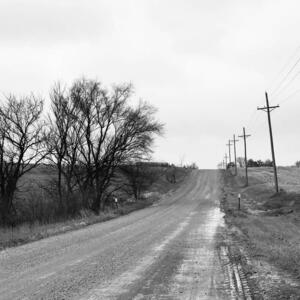
Longtime L.A. improvisin' pards Piper & von Seggern settle into the studio to cultivate their brand of active ambient music. Although your ears encounter space-out sounds reminiscent of longer raga & drone forms, the stereo playing field constantly resonates with the footballs/footfalls of percussion and restless multi-instrumental interjections, stretching your brain muscles in four quick 4-minute excercises perfect for urban breaktime.
The ancient burial ground beneath your building might whisper to you; the eyes of the checkout guy from the 7-Eleven might appear in the Amazon truck's exhaust smoke; you might remember brushing against the sage as you hiked in the desert under clouds of stars, hearing your own heartbeat when a meteor shot over the hill.
That's if you have time for a break, of course. Well, make time for this.
* * *
Listen/buy here.
]]>
Live review: Aron Kallay with Gamelan Light Streams at 2220 Arts & Archives, April 9, 2024.tag:www.metaljazz.com,2024://1.18582024-04-12T00:57:47Z2024-04-12T01:06:57Z
Building bridges with extra notes.metalhttps://www.metaljazz.com
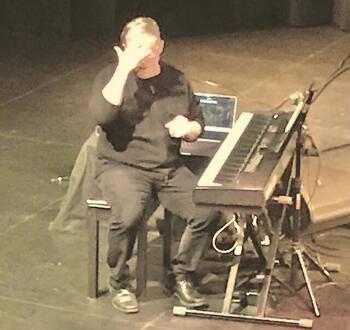
Aron Kallay and his computer-interfaced electric piano put on a stellar display of microtonal music's intellectual and emotional effects.
Each of the 10 selections by 10 composers required an introduction and a switch of programmed scales, which the allergically afflicted Kallay handled so deftly that his sneezing seemed like rhythmic punctuations of the introductions, never intruding on the music itself.
Just as difficult was the change in moods, which ranged from pastoral beauty with a high degree of familiar melodic content (John Schneider's "Lament") to a densely modernized take-off on the rhythms of Chopin ("Alien Warp Etude"). With its immediately accessible classical references, microtonal forefather Ben Johnston's stirring "Toccata From Suite for Microtonal Piano" displayed the kind of bridge building that was necessary in 1978 -- and still is, even if this small hall was sold out.
The biggest heart tug came from the evening's title composition, "The Blur of Time and Memory." As Alexander Elliot Miller's ghostly harmonies gathered, separated and gathered again, it was hard to imagine standard tunings conveying this kind of complex sadness, and harder still to imagine that the author was able at 28 to express such loss.
Kallay breezed through everything -- delicate trills, tripping arpeggios, firm chords. Yes, the instrument had to be touch-sensitive, and it even handled those block chords on the low end pretty well.
The program concluded with Bill Alves' four-member Gamelan Light Streams fronted by Kallay and cellist Maggie Parkins, performing the world premiere of Akshaya Avril Tucker's "My Soul, Soul of All." The metallophones dinged calmly, a gong occasionally poured a hush over the floor, Parkins carved the space into equal parts with long, raw threads. The audience synchronized breath. A man in a pointed Prussian helmet ran outside, weeping and claiming he had lost the will to live.
* * *
A presentation of Piano Spheres and Microfest.
* * *
PHOTO BY FUZZY BAROQUE.
]]>
Sculpture: Luis Bermudez (1953-2021), "Sobre la Vida" at L.A. Louver, Venice, CA.tag:www.metaljazz.com,2024://1.18552024-03-29T00:24:48Z2024-03-29T00:46:52Z
Luis Bermudez invites us into the earth.metalhttps://www.metaljazz.com
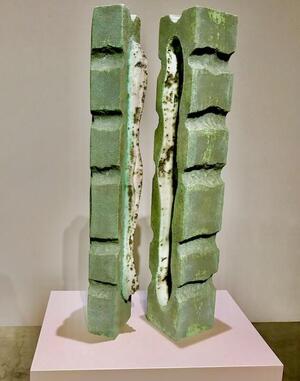
Luis Bermudez invites us into the earth. Through his eyes and hands, we can see the mineral world in a smaller, organized way -- not to impose ourselves on it, but to reduce our fear and to locate a place of balance.
Bermudez allegorizes earthly and animal beauty. His forms and glazes seem recognizable, often without being identifiable. We want to go inside his sculptures, because we feel we have been there.
To go into the clay is to enter a place that moves, changes, breathes. Bermudez knows that a mountain or a sculpture stands still only for a moment, and only if the viewer stands still too. It is born every second.
* * *
Up through May 11; gallery website here; Bermudez website here.
Recommended listening: Christopher Garcia's Xochi Cuicatl, especially track 3 from "Resonancia" and track 1 from "Resiliencia."
]]>
Record review: Judas Priest, "Invincible Shield" (Columbia/Epic)tag:www.metaljazz.com,2024://1.18522024-03-22T15:51:01Z2024-03-22T15:57:23Z
Moralists in hell.metalhttps://www.metaljazz.com
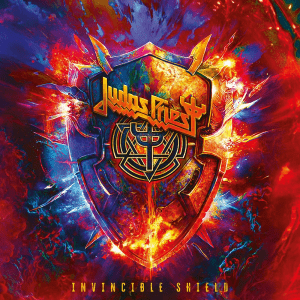
Half a century since its debut recording, the Priest brand maintains full metal luster while proffering some delectable confusion.
It's a sign of the times that vocalist Rob Halford can both bark "Hell is where we reign" ("Gates of Hell") and act as moralist-in-chief, railing against internet mass hypnotism ("Panic Attack"), wartime desolation ("The Serpent and the King") and hypocritical grifters ("Devil in Disguise"). Apparently the erstwhile devils have populated the upper world, leaving Gehenna to serve as metal's mosh pit, where Halford rules wearing the "Crown of Horns." Gosh, it's paradise, especially if the songcraft's this strong. Adding to the anarchy in "As God Is My Witness," the peaceful archangel Zadkiel, traditionally shown holding a knife because he snatched it from Abraham to spare Isaac's life, is somehow found starting an "unholy war." The role reversals continue with the final grand ballad "The Lodger" (written by "Some Heads Are Gonna Roll" composer Bob Halligan Jr.), a pocket murder mystery that dares you to figure out who the hell dunnit.
No -- anyone tempted to figure something out will contract metal fever instead. Of the 14 tracks in the Deluxe Edition, only a few fall slightly below the level of Priest's all-time pinnacles, and that's only because they're too fast to attempt dynamics (no diss to Scott Travis' hair-raising doublekick assault). The guitars of slick Richie Faulkner and still-functional Glenn Tipton pile on all the riffs, introductions and solos you could want, not a keyboard in earshot. And damn, Halford screams and sings his black heart out in song structures that load tons o' melodic hookery and rhythmic sock.
"Trial by Fire" has a lurchy beat and a wound-up chorus you won't forget; "Fight of Your Life" cranks a dirty blues-rock riff for the pub codgers. And who are the "Giants in the Sky"? Jimi Hendrix, Jeff Beck and Steve Marriott come to mind (and you know Steve didn't need shoe lifts to qualify), but ask Rob next time you see him.
Seeing him might not be hard, since Judas Priest are still scraping up the steel to tour the (mostly eastern) USA as well as Europe all spring and summer. After which they presumably return to hell -- although, as Priest has demonstrated, the distinction fades daily.
* * *
Read MetalJazz's review of Judas Priest's 2018 "Firepower" here and 2008 "Nostradamus" here.
]]>
How to use this site.tag:www.metaljazz.com,2024://1.18542024-03-18T23:09:05Z2024-03-26T06:10:46Zmetalhttps://www.metaljazz.com
I am sometimes asked why I have not written a book. Well, I have, and this website is it.
To sample a Greatest Hits of general interest from a long writing career, browse through the Categories in the Archives, here, and skip MetalJazz, which includes everything since 2007.
Most of the site, though, has been devoted to California improvisers and some who often visit Los Angeles. Names that have cropped up frequently include Vinny Golia, Alex Cline, the Pan Afrikan Peoples Arkestra, Christopher Garcia, Azar Lawrence, Dwight Trible, Nicole Mitchell, Mark Dresser, Roberto Miranda, Leni Stern, Charles Lloyd, Dan Rosenboom, Steuart Liebig, Jeff Gauthier, G.E. Stinson, Charles Owens, Gerald Clayton, Jeff Kollman, Derek Sherinian and more. For a particular name, use the Search This Site feature, or try a search engine including metaljazz.com in the terms.
Los Angeles has always contained corners for unusual music, performed by some of the best players in the world. Thanks for reading.
--Greg Burk
]]>
Record review: Charles Lloyd, "The Sky Will Still Be There Tomorrow" (Blue Note)tag:www.metaljazz.com,2024://1.18502024-03-15T16:25:15Z2024-03-17T22:28:02Z
Transitory yet permanent.metalhttps://www.metaljazz.com
Charles Lloyd has again placed his nonpareil sax and flute adjacent to Jason Moran's infinitely adaptable piano, which is always the best kind of news. The addition of the highly experienced Larry Grenadier (Brad Mehldau) and Brian Blade (Joshua Redman, Wayne Shorter) on bass on drums makes for another enviable Lloyd Quartet, and they've gifted us with a golden double album to celebrate Lloyd's 86th birthday. The highlights are many, but the first and last selections emit a special shine.
When we think of a "Defiant, Tender Warrior," Nina Simone might come to mind; regardless of inspiration, this leadoff song makes a deep impression. Blade's toms usher us in, a combination of murmuring heartbeat and call to war. Once Moran's gentle chords have established the inviting melody, Grenadier takes over the low punches and Blade starts whispering behind Lloyd and Moran, whose tenor and piano engage in a telepathic fugue born of countless hours' communion. This very unusual yet immediate performance invites repeat dives, not least to appreciate Grenadier, who writes a song of his own while tuning in to every harmonic variation.
The album's final entry is "Defiant, Reprise; Homeward Dove." This more straightforward version sets up a Lloyd tenor solo that speaks urgent comfort before ending with a flutter of wings and a few breaths, as Blade and Moran mark out the last spare but sure steps down a road. The closing statement's tenderness, with defiance left behind, leaves a listener's eyes in unfocused pools.
In between lies a world of variety. "The Lonely One," with its cinematic rolls over the dunes, could be Lawrence of Arabia. In "Monk's Dance," Moran compresses Thelonian snippets before he and Lloyd whirl into abstraction. "Ghost of Lady Day" brings Grenadier close to Charlie Haden's plaintive meditation as Lloyd echoes "Go Down Moses" and "Strange Fruit," and the rhythm surges like the sea. Lloyd's most recent revisitation of "Lift Every Voice and Sing" puts the accent on any bright, optimistic individual whose belief is essential to the choir and the congregation.
The song "The Sky Will Still Be There Tomorrow" reminds us that the sky can be blue and that Ornette Coleman wrote "When Will the Blues Leave?," the answer to which is "Never." Lloyd's very Ornettish tenor introduction briefly quotes the tune and reaffirms a philosophy: Music is transitory yet permanent, because its essence partakes of the universal soul. We know it when we hear it.
Listen to "Defiant, Tender Warrior" here.
* * *
Dorothy Darr, Charles Lloyd's wife, adds: "'Tender Warrior' is a name a fellow saxophonist gave Charles a long time ago, and it seemed appropriate to add 'Defiant' to this."
* * *
Charles Lloyd plays the Hollywood Bowl Jazz Festival on Saturday, June 15.
COVER PHOTO AND DESIGN BY DOROTHY DARR.
]]>
Record review: Maetar, "Love Dub & the Abstract One Drop" (Ropeadope)tag:www.metaljazz.com,2024://1.18482024-03-07T20:53:33Z2024-03-08T21:59:56Z
God listens to Maetar.metalhttps://www.metaljazz.com
God listens to Maetar. The Deity requires stimulating input from her creations, and the vibrations must facilitate the widest range of divine options, accompanied by maximum focus. Maetar take care of the options thanks to the roots of brothers Hagai (Flumpet, trumpet etc.) and Itai (bass etc.) in the storied Levantine valley of Megiddo, crossroads of the ancient world, plus the multiple rhythmic studies of drummer Richard Fultineer. And the focus? You can hear Maetar's triangulation in even greater detail after a 10-year release hiatus, because Hagai had to relearn his approach to breath in the wake of brain surgery.
Brothers play together with an understanding beyond thought. Taking that intuition to the next level, Hagai's rehab became a source of new nourishment for the Maetar trio's perennial jams -- 17 of the 20 tracks on this double album are almost entirely improvised, or "direct transmissions," as the band puts it. You can hear the grooves and melodies fall together without hesitation, because the group listening is so acute; the music seems to flow like breath in a shared dream.
So most of "Love/Abstract" is grooves with melodies and textures. Afrobeat, reggae, funk, blues, rocky fusion -- one or all at the same time, and the brothers draw a wild variety of electronic tones from their instruments as well as adding this or that, such as Hagai's recorder or double-reed Chinese suona. No show-off, Fultineer is devoted to the ensemble feel on traps, but gets to slap up a hand-drum dust storm on the village healing ceremony "Strong Men Dance."
The more arranged teaser tracks -- the peppy "In the Sun" and the gorgeously yearning "After All" -- are not quite typical. Over Fultineer's martial brushes on "Love Lifts Me," Hagai plumbs the depths of sorrow via duduk (a Middle Eastern double-reed horn) and rises to faint hope via Flumpet, and Itai scrapes wonderful textures with his bow; it's a portrait of emotion, concluding with a melody so perfect that everyone knows just when to stop. "Fütna" rolls along with a pleasant river rhythm and a tasteful dublike drop-out rivaling Augustus Pablo. "Goat Milk" gets the whole North African village jumping to Fultineer's polyrhythms (hooky, too). "Age to Rage" throws reggae, Arabic, noise and romance together and makes it work.
Maetar don't really make things work, though; they position their skills so that the music can coalesce. You feel it happening! You're clicking down the line with God, sharing the air.
* * *
Maetar celebrate the release of "Love Dub and the Abstract One Drop" at Harvelle's in Santa Monica on Friday, March 15; tickets here.
Sample/buy here.
MAIN PAGE PHOTO BY JIM BERMAN.
]]>
Local metal: Zombie Eating Horse.tag:www.metaljazz.com,2024://1.18462024-02-29T18:34:45Z2024-02-29T18:43:49Z
"May the bridges I burn light the way out."metalhttps://www.metaljazz.com
Orlando Garcia's wrists are actually quite relaxed. They just don't sound that way, because Lond is a pounder. Listening to him makes you want to throw a slab of cheap chuck between his sticks and his snare head, which he has loosened so it sounds like a war tom. Lond could tenderize that meat in seconds.
Lond, at first the guitarist of Zombie Eating Horse, is also a composer of great originality and variety, mixing up hand beats and foot beats (and even a tiny upside-down cymbal), fast and slow in the same song. Such frameworks make strong racks on which a guitarist can hang nasty riffs and dissonant stings -- although a certain Julian currently holds that role, it's a tribute to Lond's vision that the ZEH sound has remained consistent for over a decade of guitar and bass switch-ups.
Even wordless, Zombie Eating Horse would be music of discontent. But add the roaring despair of vocalist and old friend Jon -- "May the bridges I burn light the way out" -- and it becomes hard to imagine whether feelings or sounds came first; they all speak together.
The beats aren't the only places where surprises keep cropping up: You might hear a pure vocal harmony out of nowhere, or an old-fashioned high-tech guitar solo, or a noise collage. You notice a 13-minute track? It might contain a false ending, or three individual songs. Trip through Zombie Eating Horse's whole catalog; these dudes have fun.
Zombie Eating Horse make metal like no one else's. They come from Whittier by way of Montebello. They played Ozzfest Meets Knotfest in 2017. Their latest single, "Old Monster," came out last Halloween. Their name means whatever you want it to. For other questions, consult the music.
* * *
Zombie Eating Horse plays Knucklehead in Hollywood on Thurs., March 14.
Listen/buy here and on other streaming services.
]]>
Live review: Jeremy Cunningham Quartet; Anna Butterss & Ben Lumsdaine at 2220 Arts & Archives, February 10, 2024.tag:www.metaljazz.com,2024://1.18432024-02-12T18:14:06Z2024-02-17T01:55:36Z
A meditative evening that opened holes in the sky.metalhttps://www.metaljazz.com
A meditative evening that opened holes in the sky.
Anna Butterss & Ben Lumsdaine looked like monastics -- she shorn and erect in baggy togs beside her bass, he neat and bespectacled behind his drums. And the two longtime collaborators followed through with understated grooves designed to level out the twitches of our overstimulated minds. As Lumsdaine laid down steady midtempo beats, occasionally flavoring them with a brief counterrhythm or an electronic enhancement, Butterss confined her long fingers mostly to perfect back-and-forths among a few low notes, acting the role of humble comforter. In this she resembled Jimmy Garrison in John Coltrane's mid-'60s quartet, except here the bass carried the foreground and the rhythm pulled simpler. During one span, Butterss varied her sound with a paper diaphragm behind her strings, producing an African percussive effect. Mostly serious, she smiled when the interaction hit an especially satisfying bend in roads whose scenery varied just enough. The duo closed uptempo, with Butterss roaming confidently up the neck. The capacity front-room crowd stood rapt throughout, heads nodding.
Chicago drummer Jeremy Cunningham released "The Weather Up There" at the start of the pandemic. He made it as a way of working through a family tragedy, and he didn't want it forgotten. Two of the exceptional musicians who abetted this exceptional recording were onstage this night.
Cunningham drove the subtly melodic compositions from behind his small kit, first as a slogging two-fisted sloth, then tightening up into a fusion powerhouse, but always delivering essential human feel. On keyboard and an age-delacquered alto sax that seemed to vibrate in the stage lights, Josh Johnson applied his rainbow-nailed fingers to solos divided between melody and adventurous improvisation; his green-hosed shoeless feet, meanwhile, stroked an infinity of effects from 15 (fifteen) effects pedals. Just as formidable, guitarist Jeff Parker slouched next to sheet music and provided his own orchestra: clean long jazz solos, distorted metallic explosions, softly percussive string pats, lush chords, and electronic colorations (one extension of a single concluding note was pure wizardry). Tall electric bassist Paul Bryan plucked it funky, the anchor in the gale.
The fascination never flagged; the sound sparked, surged and saturated. Cunningham's group gripped us with music, while also affecting us in unconscious ways (and those ways are the best).
Sample Jeremy Cunningham's "The Weather Up There" here.
]]>
Links: L.A. performances (2/9/24).tag:www.metaljazz.com,2024://1.18422024-02-09T20:55:22Z2024-04-22T16:54:16ZThis week: Pan Afrikan Peoples Arkestra, Satriani/Johnson/Vai, Pete Escovedo, Anna Butterss, Eliades Ochoa, Julius Rodriguez, Miller Wrenn/Ben Rosenbloom, Dirty Dozen Brass Band, Mictlantecuhtli, Gov't Mule, more.metalhttps://www.metaljazz.com
Select chronological listings.
* The World Stage in Leimert Park has Friday 8pm PT (and sometimes other days) in-person presentations with occasional simultaneous live streams of righteous jazz; keep up with the schedule here. Donations encouraged here. Fri. Feb. 9: the greatest and most tumultuous tradition in Los Angeles jazz, Pan Afrikan Peoples Arkestra. Sat. Feb. 10, 4:30pm: Panel Discussion and Live Performances: The History of Jazz in Leimert Park, with panelists Kamaud Daáood, Dwight Trible, Carl Burnett, Lance Williams and Tony Austin, moderated by Ben Caldwell (performances too; all streamable here). Fri. Feb. 16: saxist Louis Van Taylor. Fri. Feb. 23: Dexter Gordon Birthday Celebration.
* The Orpheum downtown rocks and jazzes at times. Fri. & Sat. Feb. 9 & 10: G3 guitar hero show with Joe Satriani, Eric Johnson & Steve Vai. Tickets here.
* Catalina's Jazz Club in Hollywood hosts mostly mainstream jazz and singers, but there are exceptions. Fri. & Sat. Feb. 9 & 10: Latin-jazz patriarch Pete Escovedo. Full calendar here.
* 2220 Arts + Archives (Beverly Blvd. near Alvarado) hosts a variety of cultural presentations including jazz & electronic. Sat. Feb. 10: modern abstraction from Jeremy Cunningham Quartet, Anna Butterss & Ben Lumsdaine. Tues. Feb. 20: Piano Spheres presents Vicki Ray. Listings here.
* Sat. Feb. 10: Cal State Northridge's Soraya hosts its annual Jazz at Naz festival, the last night featuring Cuban guitar veteran Eliades Ochoa. Tickets for live and streaming here.
* Open Gate Theater has moved its long-running and invaluable avant concert series to the Neighborhood Unitarian Universalist Church, 301 N. Orange Grove Ave., Pasadena. Sun. Feb. 11, 7pm: bassist Miller Wrenn Large Ensemble (electronics! winds! strings! percussion! voices!) plus precise abstract pianist Ben Rosenbloom Unit featuring Scott Worthington (bass) and Will Salmon (flute & voice). Sun. March 2: Kallen-LeBaron & Powell, Wayne Peet Band. Sun. April 7: new mixed-media works by Mikaela Elson, Tany Ling and Elliot Menard. Sun. May 6: operatics from Anne LaBaron, Will Salmon. Sun. June 16: Steuart Liebig/Minim, Cassia Streb with special guests. More here.
* The Mint (Pico & Crescent Heights) usually has Sunday jazz shows anchored by pianist Sam Hirsh Trio, and other dates of note. Mon. Feb. 12: New Orleans' Dirty Dozen Brass Band. Check listings here.
* 1720 (east of downtown, south of the 10 freeway) books metal etc. Mon. Feb. 12: Free Metal Monday featuring the impressively skilled and variegated black metal of Mictlantecuhtli, Imperialist, more. Sat. Feb. 24: veteran Polish death metal from Vader. Fri. March 8: Ov Sulfur. Thurs. March 14: Darkest Hour. Sun. April 14: Crematorium. Tues. April 16: Tyr. Sat. April 27: Korpiklaani. Sat. May 11: Born of Osiris. Sun. May 19: Decapitated. Full calendar here.
* Midtown's The Wiltern hosts eclectic acts within its classic Art Deco halls. Thurs. Feb. 15: god of blues-rock guitar Warren Haynes and Gov't Mule. Thurs. April 11: Chris Botti. Lineup here.
* The LAX-area bar Sam First offers 7:30pm and 9pm jazz shows, in person and sometimes STREAMING. Tuesday Happenings feature jams led by top local artists. Fri. & Sat. Feb. 16 & 17: alto saxist Devin Daniels Quintet records. Thurs. Feb. 22: pianist Kei Akagi Trio. Fri. & Sat. Feb. 23 & 24: pianist Josh Nelson Ensemble. Wed. Feb. 28: pianist Gloria Cheng (7:30). Thurs. Feb. 29: pianist Vardan Ovsepian. Thurs. March 7: pianist Todd Cochran Trio. Wed. March 13: trombonist-composer Jon Hatamiya Sextet. Look here for full schedule and options.
* REDCAT (beneath downtown's Disney Hall) presents some experimental music and jazz along with its culturally edgy programming. Sat. Feb. 17: Sans Soleil (Chris Williams & Patrick Shiroishi) with William Parker & Lesley Mok. Sat. Feb. 24: Delbert Anderson & Mali Obomsawin. Fri. & Sat. June 14 & 15: Partch Ensemble. Calendar here.
* The Baked Potato in Universal City presents fusion (etc.) concerts at 8 & 10pm nightly. Sun. Feb. 18: saxist Chuck Manning, guitarist Larry Koonse, bassist Darek Oles and drummer Jason Harnell keep it quiet and involving as L.A. Jazz Quartet. Thurs. & Fri. Feb. 29 & March 1: Virgil Donati Group. Thurs. March 7: Danny Janklow Elevation. Fri. & Sat. March 22 & 23: Michael Landau Group. Sun. March 24: Hazy Jane. Full schedule here.
* Atwater's adventurous avant/modern/world club Zebulon offers surprises from the present and past. Sun. Feb. 18: spare guitarist Marc Ribot's Ceramic Dog. Thurs. Feb. 22: Kahil El'Zabar's Ethnic Heritage Ensemble. Fri. April 19: Deathchant, Danava. Full calendar here.
* Vibrato, a luxurious restaurant high up in Bel Air, books mostly mainstream jazz singers. Sun. Feb. 18: Alan Chan Jazz Orchestra. Full schedule here.
* JustJazzTV is a great resource for live jazz. Thurs. Feb. 22: outbound violinist Jenny Scheinman leads a star quintet featuring guitarist Jeff Parker, guitarist Adam Ratner, drummer Mark Ferber and bassist Karl McComas Reichl at The Townhouse in Venice.
* Highland Park's Lodge Room occasionally books jazz, metal, heft and influential obscurities. Thurs. Feb. 22: Bassekou Kouyate. Mon. Aug. 5: Buzz Osborne is King Buzzo & Trevor Dunn. Full schedule here.
* The Whisky on Sunset Strip books metal etc. Fri. Feb. 23: sounding like no one else from the original '80s Sunset Strip crowd, the theatrical metal of Lizzy Borden. Sat. Feb. 24: Brazilian deathsters Crypta. Sat. March 2: Thredge. Fri. March 8: Thor with Cherie Currie. Tues. April 2: Raven. Wed. April 3: Uli Jon Roth. Sat. April 27: Firewind. Tues. April 30: Doyle, Otep. Fri. July 19: Robby Krieger. Calendar here.
* Downtown's Bellwether rocks a fair amount. Sat. Feb. 24: Machine Head. Tues. March 5: Municipal Waste.
* Sat. Feb. 24, 7pm: Jazz-funk keyboardist Brandon Coleman plays West Hollywood's Sun Rose, 8430 Sunset Blvd., as part of the city's free Winter Sounds series.
* Santa Monica's Jacaranda music series presents a great selection of forward-looking modern classical and world music. Sun. Feb. 25: Kahil El'Zabar directs the Lyris Quartet and his Ethnic Heritage Ensemble in exploring the influence of Arnold Schoenberg's 12-tone music upon John Coltrane. Full listings here.
* The new-music and avant-jazz series Soundwaves presents monthly Saturday 3:30pm concerts at Santa Monica Public Library, 601 Santa Monica Blvd., Santa Monica 90401; FREE. Sat. March. 2: saxophonist Chris Jonas. Sat. April 6: Cold Blue Music Night. Sat. May 4: guitarist Joe Baiza Quartet with vocalist Jessika Kenney, bassist David O. Jones and drummer Brian Christopherson. Sat. June 1: bassist Steuart Liebig's Minim with oboeist Breana Gilcher, cellist Maggie Parkins and pianist Vicki Ray. Sat. July 6: The Present Quartet with bassist Jeff Schwartz, flutist Ellen Burr, harpist Anne LeBaron and windman Charles Sharp.
* The Jazz Bakery has resumed sponsoring live shows; view its calendar here. Sat. March 2: the experienced organ & guitar duo of Larry Goldings & Larry Koonse at Westwood's Nimoy. Sun. May 19: big event with abstract piano great Vijay Iyar Trio at Santa Monica's Moss Theater.
* The Canyon in Agoura Hills books its share of metal, fusion and original good stuff. Fri. March 8: Gene Loves Jezebel. Sat. March 30: Lynch Mob. Fri. April 5: Tom Keifer. Calendar here.
* The Fonda Theater in Hollywood has occasional metal & world. Sun. March 10: Voivod, Prong. Calendar here.
* Downtown's Belasco Theater stages some rock & metal shows. Sun. March 24: KMFDM. Tues. April 30: Insomnium. Fri. May 24: Cattle Decapitation, Carnifex. Calendar & tix here.
* Alva's Showroom in San Pedro brings in some intriguing music from the edges in addition to tributes and stuff. Fri. & Sat. March 29 & 30: Mike Keneally & Beer for Dolphins. Full lineup here.
* The Saban Theater in Beverly Hills occasionally melts faces or hosts an outside master. Sat. April 6: Tom Keifer, L.A. Guns. Calendar here.
* Downtown's Disney Hall presents some jazz and events of note beyond classical. Sat. April 20: Herbie Hancock. Tickets here.
* The Kia Forum in Inglewood gets heavy now and then. Oct. 8: Iron Maiden. Listings here.
* Piano Spheres always has topflight outward programming from the classically trained world at venues around town. Calendar here.
* Keep up with L.A. Jazz Society events, including its Young Musician Showcases, here.
* The Jazz Salon presents top singers on Thursdays and sometimes Sundays at downtown's Los Angeles Athletic Club. Check in here. (The Salon moves to regular Sundays in March; watch for updates.)
* The Mayan downtown has jazz and rock sometimes. Calendar here.
* Inglewood's midsize YouTube Theater brings variety programming. Calendar here.
* El Rey Theater on Wilshire Boulevard's Miracle Mile books yer occasional metal show. Calendar here.
* Downtown's Peacock Theater (formerly Microsoft Theater) occasionally books heavy music. Lineup here.]]>
Links: L.A. performances (2/2//24).tag:www.metaljazz.com,2024://1.18412024-02-02T21:49:23Z2024-04-22T16:54:16ZThis week: Glenn Hughes, Eric Revis, Booker T., Delfeayo Marsalis, Wendy Richman, Sun Ra Arkestra, Gerald Clayton, Grammy After Party, more.metalhttps://www.metaljazz.com
Select chronological listings.
* The Whisky on Sunset Strip books metal etc. Fri. Feb. 2: Trapeze, Deep Purple, Black Country Communion, the extravagant soul singer and driving bassist, ladies an' gennulmen, Glenn Hughes (last time we saw him in L.A., a couple of BCC mates joined for the encore). Fri. Feb. 23: Lizzy Borden. Sat. Feb. 24: Brazilian deathsters Crypta. Sat. March 2: Thredge. Fri. March 8: Thor with Cherie Currie. Tues. April 2: Raven. Wed. April 3: Uli Jon Roth. Sat. April 27: Firewind. Tues. April 30: Doyle, Otep. Fri. July 19: Robby Krieger. Calendar here.
* The World Stage in Leimert Park has Friday 8pm PT (and sometimes other days) in-person presentations with occasional simultaneous live streams of righteous jazz; keep up with the schedule here. Donations encouraged here. Fri. Feb. 2: powerful yet supple bassist Eric Revis can draw from the best to stock his ensemble. Fri. Feb. 9: Pan Afrikan Peoples Arkestra. Sat. Feb. 10: Panel Discussion and Live Performances: The History of Jazz in Leimert Park. Fri. Feb. 16: saxist Louis Van Taylor. Fri. Feb. 23: Dexter Gordon Birthday Celebration.
* Sat. Feb. 2-Sat. Feb. 10: Cal State Northridge's Soraya hosts its annual Jazz at Naz festival, which includes MGs organ groover Booker T. Jones (2/2 & 2/3), fine composer and trombonist Delfeayo Marsalis (2/7) and Eliades Ochoa (2/10). Tickets for live and streaming here.
* The new-music and avant-jazz series Soundwaves presents regular Saturday 3:30pm concerts at Santa Monica Public Library, 601 Santa Monica Blvd., Santa Monica 90401; FREE. Sat. Feb. 3: violinist-violist-vocalist Wendy Richman arranges Hildegard von Bingen and performs her own compositions. Sat. March. 2: saxophonist Chris Jonas. Sat. April 6: Cold Blue Music Night. Sat. May 4: guitarist Joe Baiza Quartet with vocalist Jessika Kenney, bassist David O. Jones and drummer Brian Christopherson. Sat. June 1: bassist Steuart Liebig's Minim with oboeist Breana Gilcher, cellist Maggie Parkins and pianist Vicki Ray. Sat. July 6: The Present Quartet with bassist Jeff Schwartz, flutist Ellen Burr, harpist Anne LeBaron and windman Charles Sharp.
* Atwater's adventurous avant/modern/world club Zebulon offers surprises from the present and past. Sun. Feb. 4: Always a wild and joyful ride, it's the Sun Ra Arkestra. Sun. Feb. 18: Marc Ribot's Ceramic Dog. Thurs. Feb. 22: Kahil El'Zabar's Ethnic Heritage Ensemble. Fri. April 19: Deathchant, Danava. Full calendar here.
* Highland Park's Lodge Room occasionally books jazz, metal, heft and influential obscurities. Sun. Feb. 4: Jazz Is Dead blowout with Gerald Clayton, Immanuel Wilkins, Joel Ross, Kendrick Scott, Matt Brewer; two shows (sold out). Thurs. Feb. 22: Bassekou Kouyate. Mon. Aug. 5: Buzz Osborne is King Buzzo & Trevor Dunn. Full schedule here.
* JustJazzTV is a great resource for live jazz. Sun. Feb. 4, 5-11pm: Grammy After Party and Jam at Strada downtown.
* The Mint (Pico & Crescent Heights) usually has Sunday jazz shows anchored by pianist Sam Hirsh Trio, and other dates of note. Mon. Feb.12: New Orleans' Dirty Dozen Brass Band. Check listings here.
* Fri. Feb. 9: Windman Bennie Maupin performs his 1974 classic "The Jewel in the Lotus" with a master band featuring Steve Lehman (alto), Miguel Atwood-Ferguson (viola), Caleb Veazey (guitar), David Arnay (piano), Darek Oles (bass), Kenny Sara (drums) and Eric McKain (percussion) at midtown's Wilshire Ebell Theater; tickets here.
* Catalina's Jazz Club in Hollywood hosts mostly mainstream jazz and singers, but there are exceptions. Fri. & Sat. Feb. 9 & 10: Pete Escovedo. Full calendar here.
* 2220 Arts + Archives (Beverly Blvd. near Alvarado) hosts a variety of cultural presentations including jazz & electronic. Sat. Feb. 10: Jeremy Cunningham Quartet, Anna Butterss & Ben Lumsdaine. Tues. Feb. 20: Piano Spheres presents Vicki Ray. Listings here.
* Sat. Feb. 10, 7pm: Post-traditional jazz pianist Julius Rodriguez plays West Hollywood's Sun Rose, 8430 Sunset Blvd., as part of the city's free Winter Sounds series.
* Open Gate Theater has moved its long-running and invaluable avant concert series to the Neighborhood Unitarian Universalist Church, 301 N. Orange Grove Ave., Pasadena. Sun. Feb. 11, 7pm: bassist Miller Wrenn Large Ensemble (electronics! winds! strings! percussion! voices!) plus precise abstract pianist Ben Rosenbloom Unit featuring Scott Worthington (bass) and Will Salmon (flute & voice). Sun. March 2: Kallen-LeBaron & Powell, Wayne Peet Band. Sun. April 7: new mixed-media works by Mikaela Elson, Tany Ling and Elliot Menard. Sun. May 6: operatics from Anne LaBaron, Will Salmon. Sun. June 16: Steuart Liebig/Minim, Cassia Streb with special guests. More here.
* 1720 (east of downtown, south of the 10 freeway) books metal etc. Mon. Feb. 12: Free Metal Monday featuring the impressively skilled and variegated blackened metal of Mictlantecutli, Imperialist, more. Sat. Feb. 24: veteran Polish death metal from Vader. Fri. March 8: Ov Sulfur. Thurs. March 14: Darkest Hour. Sun. April 14: Crematorium. Tues. April 16: Tyr. Sat. April 27: Korpiklaani. Sat. May 11: Born of Osiris. Sun. May 19: Decapitated. Full calendar here.
* Midtown's The Wiltern hosts eclectic acts within its classic Art Deco halls. Thurs. Feb. 15: god of blues-rock guitar Warren Haynes and Gov't Mule. Thurs. April 11: Chris Botti. Lineup here.
* The LAX-area bar Sam First offers 7:30pm and 9pm jazz shows, in person and sometimes STREAMING. Tuesday Happenings feature jams led by top local artists. Fri. & Sat. Feb. 16 & 17: alto saxist Devin Daniels Quintet records. Thurs. Feb. 22: pianist Kei Akagi Trio. Fri. & Sat. Feb. 23 & 24: pianist Josh Nelson Ensemble. Wed. Feb. 28: pianist Gloria Cheng (7:30). Thurs. Feb. 29: pianist Vardan Ovsepian. Thurs. March 7: pianist Todd Cochran Trio. Wed. March 13: trombonist-composer Jon Hatamiya Sextet. Look here for full schedule and options.
* REDCAT (beneath downtown's Disney Hall) presents some experimental music and jazz along with its culturally edgy programming. Sat. Feb. 17: Sans Soleil (Chris Williams & Patrick Shiroishi) with William Parker & Lesley Mok. Sat. Feb. 24: Delbert Anderson & Mali Obomsawin. Fri. & Sat. June 14 & 15: Partch Ensemble. Calendar here.
* The Baked Potato in Universal City presents fusion (etc.) concerts at 8 & 10pm nightly. Sun. Feb. 18: L.A. Jazz Quartet. Thurs. & Fri. Feb. 29 & March 1: Virgil Donati Group. Thurs. March 7: Danny Janklow Elevation. Fri. & Sat. March 22 & 23: Michael Landau Group. Sun. March 24: Hazy Jane. Full schedule here.
* Vibrato, a luxurious restaurant high up in Bel Air, books mostly mainstream jazz singers. Sun. Feb. 18: Alan Chan Jazz Orchestra. Full schedule here.
* Downtown's Bellwether rocks a fair amount. Sat. Feb. 24: Machine Head. Tues. March 5: Municipal Waste.
* Sat. Feb. 24, 7pm: Jazz-funk keyboardist Brandon Coleman plays West Hollywood's Sun Rose, 8430 Sunset Blvd., as part of the city's free Winter Sounds series.
* Santa Monica's Jacaranda music series presents a great selection of forward-looking modern classical and world music. Sun. Feb. 25: Kahil El'Zabar directs the Lyris Quartet and his Ethnic Heritage Ensemble in exploring the influence of Arnold Schoenberg's 12-tone music upon John Coltrane. Full listings here.
* The Jazz Bakery has resumed sponsoring live shows; view its calendar here. Sat. March 2: the experienced organ & guitar duo of Larry Goldings & Larry Koonse at Westwood's Nimoy. Sun. May 19: big event with abstract piano great Vijay Iyar Trio at Santa Monica's Moss Theater.
* The Canyon in Agoura Hills books its share of metal, fusion and original good stuff. Fri. March 8: Gene Loves Jezebel. Sat. March 30: Lynch Mob. Fri. April 5: Tom Keifer. Calendar here.
* The Fonda Theater in Hollywood has occasional metal & world. Sun. March 10: Voivod, Prong. Calendar here.
* Downtown's Belasco Theater stages some rock & metal shows. Sun. March 24: KMFDM. Tues. April 30: Insomnium. Fri. May 24: Cattle Decapitation, Carnifex. Calendar & tix here.
* Alva's Showroom in San Pedro brings in some intriguing music from the edges in addition to tributes and stuff. Fri. & Sat. March 29 & 30: Mike Keneally & Beer for Dolphins. Full lineup here.
* The Saban Theater in Beverly Hills occasionally melts faces or hosts an outside master. Sat. April 6: Tom Keifer, L.A. Guns. Calendar here.
* Downtown's Disney Hall presents some jazz and events of note beyond classical. Sat. April 20: Herbie Hancock. Tickets here.
* Knucklehead in Hollywood has metal DJs and live music. Sun. April 28: Ulthar. Sign in here.
* The Kia Forum in Inglewood gets heavy now and then. Oct. 8: Iron Maiden. Listings here.
* Piano Spheres always has topflight outward programming from the classically trained world at venues around town. Calendar here.
* Keep up with L.A. Jazz Society events, including its Young Musician Showcases, here.
* The Jazz Salon presents top singers on Thursdays and sometimes Sundays at downtown's Los Angeles Athletic Club. Check in here. (The Salon moves to regular Sundays in March; watch for updates.)
* The Mayan downtown has jazz and rock sometimes. Calendar here.
* Inglewood's midsize YouTube Theater brings variety programming. Calendar here.
* The Orpheum downtown rocks and jazzes at times. Tickets here.
* El Rey Theater on Wilshire Boulevard's Miracle Mile books yer occasional metal show. Calendar here.
* Downtown's Peacock Theater (formerly Microsoft Theater) occasionally books heavy music. Lineup here.]]>
Q & A: Doro, "Conqueress -- Forever Strong and Proud" (Nuclear Blast)tag:www.metaljazz.com,2024://1.18402024-02-02T01:43:06Z2024-02-02T01:51:06Z
Taste her steel.metalhttps://www.metaljazz.com
We asked some tough questions of the German metal queen Doro Pesch and answered them via AI.
* * *
MJ: The leadoff tune has good heft and hooks. Why are we/you the "Children of the Dawn"?
SubstiDoro: Because even though we're veteran metal warriors, we feel like we're just getting started. This should be obvious. Do you wish to taste my steel?
MJ: I hesitate to ask, but given the whole Dawn thing, if you were going to team up with Rob Halford and wanted to do a Judas Priest Song, why did you pick "Living After Midnight"?
SD: What part of "rocking to the dawn, loving to the morning" do you not understand?
MJ: Well, you also did a duet with Halford on the Jim Steinman song "Total Eclipse of the Heart," which was a hit for Bonnie Tyler in 1983. It's a fantastic performance, and you two made an even more over-the-top video for it, with Halford shooting lasers out of his fingernails. But don't the "total eclipse" thing and the bits about being "always in the dark" contradict the "dawn" metaphor and your consistent message about strength?
SD: Let me femsplain it to you. Our duet version of "Total Eclipse" brings out the inner conflicts you'll find in many Steinman songs. In this one, someone is having the kind of doubts we all do, but reaches out to that one true love, and "We'll never be wrong together." My fans and Rob's know who we're talking to.
MJ: Your fans certainly know what to expect from you, which is straight-ahead rocking metal and emotional rock balladry, of the kind you've even explored with Lemmy Kilmister of Motorhead. Most of "Conqueress" does not stray from those paths, with "Love Breaks Chains," written with Zoe-Nova Bruhn, standing as a breakout example of dynamic songcraft and guitar-vocal conversation.
SD: (sounding suspicious) Danke.
MJ: You wait until the end for "Total Eclipse," and right before that, "Heavenly Creatures," a whole different kind of rock melody within a structure that even modulates at the fade; you wrote it with Henry Staroste, keyboardist in your former band Warlock. Being about animals, it even has outlier subject matter. The expanded version of "Conqueress," which comes out a month from now, includes a 7-minute cover of Metallica's prog-thrash classic "The Four Horsemen." Are you thinking about changes in direction?
SD: In metal, we are all brothers and sisters.
MJ: And conquerors. The cover of "Conqueress" features skulls that look like the Danzig symbol. Do you want to conquer demons?
SD: Demons can be enemies or allies. And there are some who are only pests.
* * *
Watch the Doro & Halford "Total Eclipse of the Heart" video here.
]]>
Links: L.A. performances (1/26/24).tag:www.metaljazz.com,2024://1.18392024-01-26T20:29:31Z2024-04-14T01:38:46ZThis week: Azar Lawrence, Ryan Porter, John 5, Simon Phillips, Jazz at Naz, Elliott Caine, Danny Janklow, Virgil Donati, more.metalhttps://www.metaljazz.com
Select chronological listings.
* The Mint (Pico & Crescent Heights) usually has Sunday jazz shows anchored by pianist Sam Hirsh Trio, and others of note. Fri. Jan. 26: The Azar Lawrence Experience lifts the soul-jazz (read MetalJazz's recent review here). Mon. Feb.12: New Orleans' Dirty Dozen Brass Band. Check listings here.
* The World Stage in Leimert Park has Friday 8pm PT (and sometimes other days) in-person presentations with occasional simultaneous live streams of righteous jazz; keep up with the schedule here. Donations encouraged here. Fri. Jan. 26: West Coast Get Down trombonist Ryan Porter kindles melodically rambunctious fire with collaborators who might've shared his sessions with Kamasi Washington or Kendrick Lamar; he has four records of his own, too. Fri. Feb. 2: bassist Eric Revis. Fri. Feb. 9: Pan Afrikan Peoples Arkestra. Sat. Feb. 10: Panel Discussion and Live Performances: The History of Jazz in Leimert Park. Fri. Feb. 16: saxist Louis Van Taylor. Fri. Feb. 23: Dexter Gordon Birthday Celebration.
* El Rey Theater on Wilshire Boulevard's Miracle Mile books yer occasional metal show. Sat. Jan. 27: From Rob Halford to Marilyn Manson to Rob Zombie to Motley Crue to his own wild solo records, John 5 plays the hell out of a guitar. Calendar here.
* Teragram Ballroom downtown mixes in metal and jazz. Sat. Jan. 27: Joey Dosik has trodden a twisting path since he aided in the resurgence of avant bassist Henry Grimes as a teen saxist; now he's a likable soul singer. Tues. March 5: kings o' thrash Municipal Waste. Listings here.
* Catalina's Jazz Club in Hollywood hosts mostly mainstream jazz and singers, but there are exceptions. Sat. & Sun. Jan. 27 & 28: drum fusioneer Simon Phillips Protocol V. Fri. & Sat. Feb. 9 & 10: Pete Escovedo. Full calendar here.
* Sat. Jan. 27-Sat. Feb. 10: Cal State Northridge's Soraya hosts its annual Jazz at Naz festival, which includes Herb Alpert & Lani Hall (1/27, sold out), Ranky Tanky (1/31 & 2/1), Booker T. Jones (2/2 & 2/3), Delfeayo Marsalis (2/7) and Eliades Ochoa (2/10). Tickets for live and streaming here.
* The Baked Potato in Universal City presents fusion (etc.) concerts at 8 & 10pm nightly. Thurs. Feb. 1: saxist Danny Janklow Elevation with slammin' Gene Coye on drums. Thurs. & Fri. Feb. 29 & March 1: drum prodigy Virgil Donati Group. Fri. & Sat. March 22 & 23: Michael Landau Group. Sun. March 24: Hazy Jane. Full schedule here.
* The Whisky on Sunset Strip books metal etc. Fri. Feb. 2: Trapeze, Deep Purple, Black Country Communion, the extravagant soul singer and driving bassist, ladies an' gennulmen, Glenn Hughes. Fri. Feb. 23: Lizzy Borden. Sat. Feb. 24: Brazilian deathsters Crypta. Sat. March 2: Thredge. Tues. April 2: Raven. Wed. April 3: Uli Jon Roth. Sat. April 27: Firewind. Tues. April 30: Doyle, Otep. Fri. July 19: Robby Krieger. Calendar here.
* The new-music and avant-jazz series Soundwaves presents regular Saturday 3:30pm concerts at Santa Monica Public Library, 601 Santa Monica Blvd., Santa Monica 90401; FREE. Sat. Feb. 3: violinist-violist-vocalist Wendy Richman. Sat. March. 2: saxophonist Chris Jonas. Sat. April 6: Cold Blue Music Night. Sat. May 4: guitarist Joe Baiza Quartet with vocalist Jessika Kenney, bassist David O. Jones and drummer Brian Christopherson. Sat. June 1: bassist Steuart Liebig's Minim with oboeist Breana Gilcher, cellist Maggie Parkins and pianist Vicki Ray. Sat. July 6: The Present Quartet with bassist Jeff Schwartz, flutist Ellen Burr, harpist Anne LeBaron and windman Charles Sharp.
* Highland Park's Lodge Room occasionally books jazz, metal, heft and influential obscurities. Sun. Feb. 4: Jazz Is Dead blowout with Gerald Clayton, Immanuel Wilkins, Joel Ross, Kendrick Scott, Matt Brewer; two shows. Thurs. Feb. 22: Bassekou Kouyate. Full schedule here.
* JustJazzTV is a great resource for live jazz. Sun. Feb. 4, 5-11pm: Grammy After Party and Jam at Strada downtown.
* Fri. Feb. 9: Windman Bennie Maupin performs his 1974 classic "The Jewel in the Lotus" with a master band featuring Steve Lehman (alto), Miguel Atwood-Ferguson (viola), Caleb Veazey (guitar), David Arnay (piano), Darek Oles (bass), Kenny Sara (drums) and Eric McKain (percussion) at midtown's Wilshire Ebell Theater; tickets here.
* 2220 Arts + Archives (Beverly Blvd. near Alvarado) hosts a variety of cultural presentations including jazz & electronic. Sat. Feb. 10: Jeremy Cunningham Quartet, Anna Butterss & Ben Lumsdaine. Tues. Feb. 20: Piano Spheres presents Vicki Ray. Listings here.
* Sat. Feb. 10, 7pm: Post-traditional jazz pianist Julius Rodriguez plays West Hollywood's Sun Rose, 8430 Sunset Blvd., as part of the city's free Winter Sounds series.
* Open Gate Theater has moved its long-running and invaluable avant concert series to the Neighborhood Unitarian Universalist Church, 301 N. Orange Grove Ave., Pasadena. Sun. Feb. 11, 7pm: bassist Miller Wrenn Large Ensemble (electronics! winds! strings! percussion! voices!) plus precise abstract pianist Ben Rosenbloom Unit featuring Scott Worthington (bass) and Will Salmon (flute & voice). Sun. March 2: Kallen-LeBaron & Powell, Wayne Peet Band. Sun. April 7: new mixed-media works by Mikaela Elson, Tany Ling and Elliot Menard. Sun. May 6: operatics from Anne LaBaron, Will Salmon. Sun. June 16: Steuart Liebig/Minim, Cassia Streb with special guests. More here.
* The LAX-area bar Sam First offers 7:30pm and 9pm jazz shows, in person and sometimes STREAMING. Tuesday Happenings feature jams led by top local artists. Fri. & Sat. Feb. 16 & 17: alto saxist Devin Daniels Quintet records. Thurs. Feb. 22: pianist Kei Akagi Trio. Fri. & Sat. Feb. 23 & 24: pianist Josh Nelson Ensemble. Wed. Feb. 28: Gloria Cheng (7:30). Wed. March 13: trombonist-composer Jon Hatamiya Sextet. Look here for full schedule and options.
* REDCAT (beneath downtown's Disney Hall) presents some experimental music and jazz along with its culturally edgy programming. Sat. Feb. 17: Sans Soleil (Chris Williams & Patrick Shiroishi) with William Parker & Lesley Mok. Sat. Feb. 24: Delbert Anderson & Mali Obomsawin. Fri. & Sat. June 14 & 15: Partch Ensemble. Calendar here.
* Vibrato, a luxurious restaurant high up in Bel Air, books mostly mainstream jazz singers. Sun. Feb. 18: Alan Chan Jazz Orchestra. Full schedule here.
* 1720 (east of downtown, south of the 10 freeway) books metal etc. Sat. Feb. 24: veteran Polish death metal from Vader. Fri. March 8: Ov Sulfur. Thurs. March 14: Darkest Hour. Tues. April 16: Tyr. Sat. April 27: Korpiklaani. Sat. May 11: Born of Osiris. Full calendar here.
* Sat. Feb. 24, 7pm: Jazz-funk keyboardist Brandon Coleman plays West Hollywood's Sun Rose, 8430 Sunset Blvd., as part of the city's free Winter Sounds series.
* Santa Monica's Jacaranda music series presents a great selection of forward-looking modern classical and world music. Sun. Feb. 25: Kahil El'Zabar directs the Lyris Quartet and his Ethnic Heritage Ensemble in exploring the influence of Arnold Schoenberg's 12-tone music upon John Coltrane. Full listings here.
* The Jazz Bakery has resumed sponsoring live shows; view its calendar here. Sat. March 2: the experienced organ & guitar duo of Larry Goldings & Larry Koonse at Westwood's Nimoy.
* The Canyon in Agoura Hills books its share of metal, fusion and original good stuff. Fri. March 8: Gene Loves Jezebel. Sat. March 30: Lynch Mob. Fri. April 5: Tom Keifer. Calendar here.
* The Fonda Theater in Hollywood has occasional metal & world. Sun. Mar. 10: Voivod, Prong. Calendar here.
* Downtown's Belasco Theater stages some rock & metal shows. Sun. March 24: KMFDM. Tues. April 30: Insomnium. Fri. May 24: Cattle Decapitation, Carnifex. Calendar & tix here.
* Alva's Showroom in San Pedro brings in some intriguing music from the edges in addition to tributes and stuff. Fri. & Sat. March 29 & 30: Mike Keneally & Beer for Dolphins. Full lineup here.
* The Saban Theater in Beverly Hills occasionally melts faces or hosts an outside master. Sat. April 6: Tom Keifer, L.A. Guns. Calendar here.
* Downtown's Disney Hall presents some jazz and events of note beyond classical. Sat. April 20: Herbie Hancock. Tickets here.
* The Kia Forum in Inglewood gets heavy now and then. Oct. 8: Iron Maiden. Listings here.
* Piano Spheres always has topflight outward programming from the classically trained world at venues around town. Calendar here.
* Keep up with L.A. Jazz Society events, including its Young Musician Showcases, here.
* The Jazz Salon presents top singers on Thursdays and sometimes Sundays at downtown's Los Angeles Athletic Club. Check in here. (The Salon moves to regular Sundays in March; watch for updates.)
* The Mayan downtown has jazz and rock sometimes. Calendar here.
* Inglewood's midsize YouTube Theater brings variety programming. Calendar here.
* The Orpheum downtown rocks and jazzes at times. Tickets here.
* Downtown's Peacock Theater (formerly Microsoft Theater) occasionally books heavy music. Lineup here.]]>
Links: L.A. performances (1/19/24).tag:www.metaljazz.com,2024://1.18372024-01-19T22:23:19Z2024-04-14T01:38:46ZThis week: Bobby West, Mike Keneally, Bunny Brunel, Pasqua & Oles, Miguel Zenon, Zakk Sabbath, Stanley Jordan, Gorod, Dave Harrington w/ Nels Cline, Joanna Hedva, Kei Akagi, more.metalhttps://www.metaljazz.com
Select chronological listings.
* The World Stage in Leimert Park has righteous local jazz. Fri. Jan. 19: experienced mainstream pianist Bobby West. Listings here.
* The Baked Potato in Universal City presents fusion (etc.) concerts at 8 & 10pm nightly. Fri. Jan. 19: guitarist, keyboardist, vocalist, composer and former Zappa lieutenant Mike Keneally always has something different to say, here with his crack Beer for Dolphins quartet. Tues. Jan. 23: Blast off with the crankin' guitar of Jeff Kollman and Cosmosquad. Full schedule here.
* Catalina's Jazz Club in Hollywood hosts mostly mainstream jazz and singers, but there are exceptions. Fri. Jan. 19: veteran fusion bassist (CAB) Bunny Brunel & Friends. Sun. Jan. 21: superguitarist Stanley Jordan. Full calendar here.
* The LAX-area bar Sam First offers 7:30pm and 9pm jazz shows, in person and sometimes STREAMING. Fri. & Sat. Jan. 19 & 20: the tuned-in veteran piano & bass duo of Alan Pasqua & Darek Oles (Friday's set is broadcast live on KJAZZ 88.1 FM). Tuesday Happenings feature jams led by top local artists, most often the inspired pianist Gerald Clayton. Thurs. Feb. 22: Miles/DiMeola/Gambale pianist Kei Akagi Trio with bassist Darek Oles and drummer Jason Harnell. Look here for full schedule and options.
* The Jazz Bakery has resumed sponsoring live shows; view its calendar here. Sat. Jan. 20: lilting Puerto Rican saxist Miguel Zenón Quartet at Santa Monica's Moss Theater.
* Downtown's Belasco Theater stages some rock & metal shows. Sat. Jan. 20: Ozzy axman Zakk Wylde's trio really does add something extra to the Sab classikks with Zakk Sabbath. Calendar & tix here.
* The Mint (Pico & Crescent Heights) usually has Sunday jazz shows anchored by pianist Sam Hirsh Trio, and others of note. Check listings here.
* 1720 (east of downtown, south of the 10 freeway) books metal etc. Mon. Jan. 22: French technical deathsters Gorod. Full calendar here.
* Atwater's adventurous avant/modern/world club Zebulon offers surprises from the present and past. Tues. Jan. 23: Dave Harrington's Pranksters West featuring Nels Cline & more, Stuart Bogie (solo), Yuka Honda (solo). Full calendar here.
* JustJazzTV is a great resource for live jazz. Tues. Jan. 23: bassist Linda May Han Oh at the Town House in Venice.
* 2220 Arts + Archives (Beverly Blvd. near Alvarado) hosts a variety of cultural presentations including jazz & electronic. Thurs. Jan. 25: Johanna Hedva; anyone who plays noisy minimalist guitar and subtitles a song "Tears Are What God Uses To Lubricate Its Big Machine of Nothing" is worth hearing. Listings here.
]]>
 Longtime L.A. improvisin' pards Piper & von Seggern settle into the studio to cultivate their brand of active ambient music. Although your ears encounter space-out sounds reminiscent of longer raga & drone forms, the stereo playing field constantly resonates with the footballs/footfalls of percussion and restless multi-instrumental interjections, stretching your brain muscles in four quick 4-minute excercises perfect for urban breaktime.
The ancient burial ground beneath your building might whisper to you; the eyes of the checkout guy from the 7-Eleven might appear in the Amazon truck's exhaust smoke; you might remember brushing against the sage as you hiked in the desert under clouds of stars, hearing your own heartbeat when a meteor shot over the hill.
That's if you have time for a break, of course. Well, make time for this.
Longtime L.A. improvisin' pards Piper & von Seggern settle into the studio to cultivate their brand of active ambient music. Although your ears encounter space-out sounds reminiscent of longer raga & drone forms, the stereo playing field constantly resonates with the footballs/footfalls of percussion and restless multi-instrumental interjections, stretching your brain muscles in four quick 4-minute excercises perfect for urban breaktime.
The ancient burial ground beneath your building might whisper to you; the eyes of the checkout guy from the 7-Eleven might appear in the Amazon truck's exhaust smoke; you might remember brushing against the sage as you hiked in the desert under clouds of stars, hearing your own heartbeat when a meteor shot over the hill.
That's if you have time for a break, of course. Well, make time for this.
 Aron Kallay and his computer-interfaced electric piano put on a stellar display of microtonal music's intellectual and emotional effects.
Each of the 10 selections by 10 composers required an introduction and a switch of programmed scales, which the allergically afflicted Kallay handled so deftly that his sneezing seemed like rhythmic punctuations of the introductions, never intruding on the music itself.
Just as difficult was the change in moods, which ranged from pastoral beauty with a high degree of familiar melodic content (John Schneider's "Lament") to a densely modernized take-off on the rhythms of Chopin ("Alien Warp Etude"). With its immediately accessible classical references, microtonal forefather Ben Johnston's stirring "Toccata From Suite for Microtonal Piano" displayed the kind of bridge building that was necessary in 1978 -- and still is, even if this small hall was sold out.
The biggest heart tug came from the evening's title composition, "The Blur of Time and Memory." As Alexander Elliot Miller's ghostly harmonies gathered, separated and gathered again, it was hard to imagine standard tunings conveying this kind of complex sadness, and harder still to imagine that the author was able at 28 to express such loss.
Kallay breezed through everything -- delicate trills, tripping arpeggios, firm chords. Yes, the instrument had to be touch-sensitive, and it even handled those block chords on the low end pretty well.
The program concluded with Bill Alves' four-member Gamelan Light Streams fronted by Kallay and cellist Maggie Parkins, performing the world premiere of Akshaya Avril Tucker's "My Soul, Soul of All." The metallophones dinged calmly, a gong occasionally poured a hush over the floor, Parkins carved the space into equal parts with long, raw threads. The audience synchronized breath. A man in a pointed Prussian helmet ran outside, weeping and claiming he had lost the will to live.
Aron Kallay and his computer-interfaced electric piano put on a stellar display of microtonal music's intellectual and emotional effects.
Each of the 10 selections by 10 composers required an introduction and a switch of programmed scales, which the allergically afflicted Kallay handled so deftly that his sneezing seemed like rhythmic punctuations of the introductions, never intruding on the music itself.
Just as difficult was the change in moods, which ranged from pastoral beauty with a high degree of familiar melodic content (John Schneider's "Lament") to a densely modernized take-off on the rhythms of Chopin ("Alien Warp Etude"). With its immediately accessible classical references, microtonal forefather Ben Johnston's stirring "Toccata From Suite for Microtonal Piano" displayed the kind of bridge building that was necessary in 1978 -- and still is, even if this small hall was sold out.
The biggest heart tug came from the evening's title composition, "The Blur of Time and Memory." As Alexander Elliot Miller's ghostly harmonies gathered, separated and gathered again, it was hard to imagine standard tunings conveying this kind of complex sadness, and harder still to imagine that the author was able at 28 to express such loss.
Kallay breezed through everything -- delicate trills, tripping arpeggios, firm chords. Yes, the instrument had to be touch-sensitive, and it even handled those block chords on the low end pretty well.
The program concluded with Bill Alves' four-member Gamelan Light Streams fronted by Kallay and cellist Maggie Parkins, performing the world premiere of Akshaya Avril Tucker's "My Soul, Soul of All." The metallophones dinged calmly, a gong occasionally poured a hush over the floor, Parkins carved the space into equal parts with long, raw threads. The audience synchronized breath. A man in a pointed Prussian helmet ran outside, weeping and claiming he had lost the will to live.
 Luis Bermudez invites us into the earth. Through his eyes and hands, we can see the mineral world in a smaller, organized way -- not to impose ourselves on it, but to reduce our fear and to locate a place of balance.
Bermudez allegorizes earthly and animal beauty. His forms and glazes seem recognizable, often without being identifiable. We want to go inside his sculptures, because we feel we have been there.
To go into the clay is to enter a place that moves, changes, breathes. Bermudez knows that a mountain or a sculpture stands still only for a moment, and only if the viewer stands still too. It is born every second.
Luis Bermudez invites us into the earth. Through his eyes and hands, we can see the mineral world in a smaller, organized way -- not to impose ourselves on it, but to reduce our fear and to locate a place of balance.
Bermudez allegorizes earthly and animal beauty. His forms and glazes seem recognizable, often without being identifiable. We want to go inside his sculptures, because we feel we have been there.
To go into the clay is to enter a place that moves, changes, breathes. Bermudez knows that a mountain or a sculpture stands still only for a moment, and only if the viewer stands still too. It is born every second.
 Half a century since its debut recording, the Priest brand maintains full metal luster while proffering some delectable confusion.
It's a sign of the times that vocalist Rob Halford can both bark "Hell is where we reign" ("Gates of Hell") and act as moralist-in-chief, railing against internet mass hypnotism ("Panic Attack"), wartime desolation ("The Serpent and the King") and hypocritical grifters ("Devil in Disguise"). Apparently the erstwhile devils have populated the upper world, leaving Gehenna to serve as metal's mosh pit, where Halford rules wearing the "Crown of Horns." Gosh, it's paradise, especially if the songcraft's this strong. Adding to the anarchy in "As God Is My Witness," the peaceful archangel Zadkiel, traditionally shown holding a knife because he snatched it from Abraham to spare Isaac's life, is somehow found starting an "unholy war." The role reversals continue with the final grand ballad "The Lodger" (written by "Some Heads Are Gonna Roll" composer Bob Halligan Jr.), a pocket murder mystery that dares you to figure out who the hell dunnit.
No -- anyone tempted to figure something out will contract metal fever instead. Of the 14 tracks in the Deluxe Edition, only a few fall slightly below the level of Priest's all-time pinnacles, and that's only because they're too fast to attempt dynamics (no diss to Scott Travis' hair-raising doublekick assault). The guitars of slick Richie Faulkner and still-functional Glenn Tipton pile on all the riffs, introductions and solos you could want, not a keyboard in earshot. And damn, Halford screams and sings his black heart out in song structures that load tons o' melodic hookery and rhythmic sock.
"Trial by Fire" has a lurchy beat and a wound-up chorus you won't forget; "Fight of Your Life" cranks a dirty blues-rock riff for the pub codgers. And who are the "Giants in the Sky"? Jimi Hendrix, Jeff Beck and Steve Marriott come to mind (and you know Steve didn't need shoe lifts to qualify), but ask Rob next time you see him.
Seeing him might not be hard, since Judas Priest are still scraping up the steel to tour the (mostly eastern) USA as well as Europe all spring and summer. After which they presumably return to hell -- although, as Priest has demonstrated, the distinction fades daily.
Half a century since its debut recording, the Priest brand maintains full metal luster while proffering some delectable confusion.
It's a sign of the times that vocalist Rob Halford can both bark "Hell is where we reign" ("Gates of Hell") and act as moralist-in-chief, railing against internet mass hypnotism ("Panic Attack"), wartime desolation ("The Serpent and the King") and hypocritical grifters ("Devil in Disguise"). Apparently the erstwhile devils have populated the upper world, leaving Gehenna to serve as metal's mosh pit, where Halford rules wearing the "Crown of Horns." Gosh, it's paradise, especially if the songcraft's this strong. Adding to the anarchy in "As God Is My Witness," the peaceful archangel Zadkiel, traditionally shown holding a knife because he snatched it from Abraham to spare Isaac's life, is somehow found starting an "unholy war." The role reversals continue with the final grand ballad "The Lodger" (written by "Some Heads Are Gonna Roll" composer Bob Halligan Jr.), a pocket murder mystery that dares you to figure out who the hell dunnit.
No -- anyone tempted to figure something out will contract metal fever instead. Of the 14 tracks in the Deluxe Edition, only a few fall slightly below the level of Priest's all-time pinnacles, and that's only because they're too fast to attempt dynamics (no diss to Scott Travis' hair-raising doublekick assault). The guitars of slick Richie Faulkner and still-functional Glenn Tipton pile on all the riffs, introductions and solos you could want, not a keyboard in earshot. And damn, Halford screams and sings his black heart out in song structures that load tons o' melodic hookery and rhythmic sock.
"Trial by Fire" has a lurchy beat and a wound-up chorus you won't forget; "Fight of Your Life" cranks a dirty blues-rock riff for the pub codgers. And who are the "Giants in the Sky"? Jimi Hendrix, Jeff Beck and Steve Marriott come to mind (and you know Steve didn't need shoe lifts to qualify), but ask Rob next time you see him.
Seeing him might not be hard, since Judas Priest are still scraping up the steel to tour the (mostly eastern) USA as well as Europe all spring and summer. After which they presumably return to hell -- although, as Priest has demonstrated, the distinction fades daily.
 I am sometimes asked why I have not written a book. Well, I have, and this website is it.
To sample a Greatest Hits of general interest from a long writing career, browse through the Categories in the Archives, here, and skip MetalJazz, which includes everything since 2007.
Most of the site, though, has been devoted to California improvisers and some who often visit Los Angeles. Names that have cropped up frequently include Vinny Golia, Alex Cline, the Pan Afrikan Peoples Arkestra, Christopher Garcia, Azar Lawrence, Dwight Trible, Nicole Mitchell, Mark Dresser, Roberto Miranda, Leni Stern, Charles Lloyd, Dan Rosenboom, Steuart Liebig, Jeff Gauthier, G.E. Stinson, Charles Owens, Gerald Clayton, Jeff Kollman, Derek Sherinian and more. For a particular name, use the Search This Site feature, or try a search engine including metaljazz.com in the terms.
Los Angeles has always contained corners for unusual music, performed by some of the best players in the world. Thanks for reading.
--Greg Burk
]]>
I am sometimes asked why I have not written a book. Well, I have, and this website is it.
To sample a Greatest Hits of general interest from a long writing career, browse through the Categories in the Archives, here, and skip MetalJazz, which includes everything since 2007.
Most of the site, though, has been devoted to California improvisers and some who often visit Los Angeles. Names that have cropped up frequently include Vinny Golia, Alex Cline, the Pan Afrikan Peoples Arkestra, Christopher Garcia, Azar Lawrence, Dwight Trible, Nicole Mitchell, Mark Dresser, Roberto Miranda, Leni Stern, Charles Lloyd, Dan Rosenboom, Steuart Liebig, Jeff Gauthier, G.E. Stinson, Charles Owens, Gerald Clayton, Jeff Kollman, Derek Sherinian and more. For a particular name, use the Search This Site feature, or try a search engine including metaljazz.com in the terms.
Los Angeles has always contained corners for unusual music, performed by some of the best players in the world. Thanks for reading.
--Greg Burk
]]>
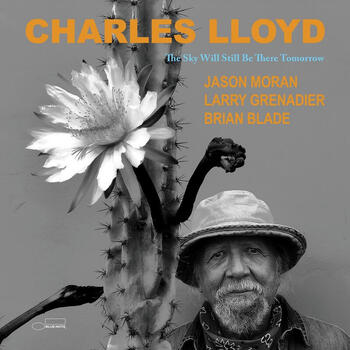 Charles Lloyd has again placed his nonpareil sax and flute adjacent to Jason Moran's infinitely adaptable piano, which is always the best kind of news. The addition of the highly experienced Larry Grenadier (Brad Mehldau) and Brian Blade (Joshua Redman, Wayne Shorter) on bass on drums makes for another enviable Lloyd Quartet, and they've gifted us with a golden double album to celebrate Lloyd's 86th birthday. The highlights are many, but the first and last selections emit a special shine.
When we think of a "Defiant, Tender Warrior," Nina Simone might come to mind; regardless of inspiration, this leadoff song makes a deep impression. Blade's toms usher us in, a combination of murmuring heartbeat and call to war. Once Moran's gentle chords have established the inviting melody, Grenadier takes over the low punches and Blade starts whispering behind Lloyd and Moran, whose tenor and piano engage in a telepathic fugue born of countless hours' communion. This very unusual yet immediate performance invites repeat dives, not least to appreciate Grenadier, who writes a song of his own while tuning in to every harmonic variation.
The album's final entry is "Defiant, Reprise; Homeward Dove." This more straightforward version sets up a Lloyd tenor solo that speaks urgent comfort before ending with a flutter of wings and a few breaths, as Blade and Moran mark out the last spare but sure steps down a road. The closing statement's tenderness, with defiance left behind, leaves a listener's eyes in unfocused pools.
In between lies a world of variety. "The Lonely One," with its cinematic rolls over the dunes, could be Lawrence of Arabia. In "Monk's Dance," Moran compresses Thelonian snippets before he and Lloyd whirl into abstraction. "Ghost of Lady Day" brings Grenadier close to Charlie Haden's plaintive meditation as Lloyd echoes "Go Down Moses" and "Strange Fruit," and the rhythm surges like the sea. Lloyd's most recent revisitation of "Lift Every Voice and Sing" puts the accent on any bright, optimistic individual whose belief is essential to the choir and the congregation.
The song "The Sky Will Still Be There Tomorrow" reminds us that the sky can be blue and that Ornette Coleman wrote "When Will the Blues Leave?," the answer to which is "Never." Lloyd's very Ornettish tenor introduction briefly quotes the tune and reaffirms a philosophy: Music is transitory yet permanent, because its essence partakes of the universal soul. We know it when we hear it.
Charles Lloyd has again placed his nonpareil sax and flute adjacent to Jason Moran's infinitely adaptable piano, which is always the best kind of news. The addition of the highly experienced Larry Grenadier (Brad Mehldau) and Brian Blade (Joshua Redman, Wayne Shorter) on bass on drums makes for another enviable Lloyd Quartet, and they've gifted us with a golden double album to celebrate Lloyd's 86th birthday. The highlights are many, but the first and last selections emit a special shine.
When we think of a "Defiant, Tender Warrior," Nina Simone might come to mind; regardless of inspiration, this leadoff song makes a deep impression. Blade's toms usher us in, a combination of murmuring heartbeat and call to war. Once Moran's gentle chords have established the inviting melody, Grenadier takes over the low punches and Blade starts whispering behind Lloyd and Moran, whose tenor and piano engage in a telepathic fugue born of countless hours' communion. This very unusual yet immediate performance invites repeat dives, not least to appreciate Grenadier, who writes a song of his own while tuning in to every harmonic variation.
The album's final entry is "Defiant, Reprise; Homeward Dove." This more straightforward version sets up a Lloyd tenor solo that speaks urgent comfort before ending with a flutter of wings and a few breaths, as Blade and Moran mark out the last spare but sure steps down a road. The closing statement's tenderness, with defiance left behind, leaves a listener's eyes in unfocused pools.
In between lies a world of variety. "The Lonely One," with its cinematic rolls over the dunes, could be Lawrence of Arabia. In "Monk's Dance," Moran compresses Thelonian snippets before he and Lloyd whirl into abstraction. "Ghost of Lady Day" brings Grenadier close to Charlie Haden's plaintive meditation as Lloyd echoes "Go Down Moses" and "Strange Fruit," and the rhythm surges like the sea. Lloyd's most recent revisitation of "Lift Every Voice and Sing" puts the accent on any bright, optimistic individual whose belief is essential to the choir and the congregation.
The song "The Sky Will Still Be There Tomorrow" reminds us that the sky can be blue and that Ornette Coleman wrote "When Will the Blues Leave?," the answer to which is "Never." Lloyd's very Ornettish tenor introduction briefly quotes the tune and reaffirms a philosophy: Music is transitory yet permanent, because its essence partakes of the universal soul. We know it when we hear it.
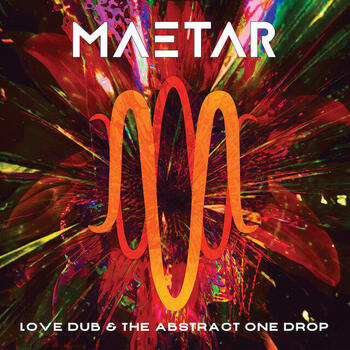 God listens to Maetar. The Deity requires stimulating input from her creations, and the vibrations must facilitate the widest range of divine options, accompanied by maximum focus. Maetar take care of the options thanks to the roots of brothers Hagai (Flumpet, trumpet etc.) and Itai (bass etc.) in the storied Levantine valley of Megiddo, crossroads of the ancient world, plus the multiple rhythmic studies of drummer Richard Fultineer. And the focus? You can hear Maetar's triangulation in even greater detail after a 10-year release hiatus, because Hagai had to relearn his approach to breath in the wake of brain surgery.
Brothers play together with an understanding beyond thought. Taking that intuition to the next level, Hagai's rehab became a source of new nourishment for the Maetar trio's perennial jams -- 17 of the 20 tracks on this double album are almost entirely improvised, or "direct transmissions," as the band puts it. You can hear the grooves and melodies fall together without hesitation, because the group listening is so acute; the music seems to flow like breath in a shared dream.
So most of "Love/Abstract" is grooves with melodies and textures. Afrobeat, reggae, funk, blues, rocky fusion -- one or all at the same time, and the brothers draw a wild variety of electronic tones from their instruments as well as adding this or that, such as Hagai's recorder or double-reed Chinese suona. No show-off, Fultineer is devoted to the ensemble feel on traps, but gets to slap up a hand-drum dust storm on the village healing ceremony "Strong Men Dance."
The more arranged teaser tracks -- the peppy "In the Sun" and the gorgeously yearning "After All" -- are not quite typical. Over Fultineer's martial brushes on "Love Lifts Me," Hagai plumbs the depths of sorrow via duduk (a Middle Eastern double-reed horn) and rises to faint hope via Flumpet, and Itai scrapes wonderful textures with his bow; it's a portrait of emotion, concluding with a melody so perfect that everyone knows just when to stop. "Fütna" rolls along with a pleasant river rhythm and a tasteful dublike drop-out rivaling Augustus Pablo. "Goat Milk" gets the whole North African village jumping to Fultineer's polyrhythms (hooky, too). "Age to Rage" throws reggae, Arabic, noise and romance together and makes it work.
Maetar don't really make things work, though; they position their skills so that the music can coalesce. You feel it happening! You're clicking down the line with God, sharing the air.
God listens to Maetar. The Deity requires stimulating input from her creations, and the vibrations must facilitate the widest range of divine options, accompanied by maximum focus. Maetar take care of the options thanks to the roots of brothers Hagai (Flumpet, trumpet etc.) and Itai (bass etc.) in the storied Levantine valley of Megiddo, crossroads of the ancient world, plus the multiple rhythmic studies of drummer Richard Fultineer. And the focus? You can hear Maetar's triangulation in even greater detail after a 10-year release hiatus, because Hagai had to relearn his approach to breath in the wake of brain surgery.
Brothers play together with an understanding beyond thought. Taking that intuition to the next level, Hagai's rehab became a source of new nourishment for the Maetar trio's perennial jams -- 17 of the 20 tracks on this double album are almost entirely improvised, or "direct transmissions," as the band puts it. You can hear the grooves and melodies fall together without hesitation, because the group listening is so acute; the music seems to flow like breath in a shared dream.
So most of "Love/Abstract" is grooves with melodies and textures. Afrobeat, reggae, funk, blues, rocky fusion -- one or all at the same time, and the brothers draw a wild variety of electronic tones from their instruments as well as adding this or that, such as Hagai's recorder or double-reed Chinese suona. No show-off, Fultineer is devoted to the ensemble feel on traps, but gets to slap up a hand-drum dust storm on the village healing ceremony "Strong Men Dance."
The more arranged teaser tracks -- the peppy "In the Sun" and the gorgeously yearning "After All" -- are not quite typical. Over Fultineer's martial brushes on "Love Lifts Me," Hagai plumbs the depths of sorrow via duduk (a Middle Eastern double-reed horn) and rises to faint hope via Flumpet, and Itai scrapes wonderful textures with his bow; it's a portrait of emotion, concluding with a melody so perfect that everyone knows just when to stop. "Fütna" rolls along with a pleasant river rhythm and a tasteful dublike drop-out rivaling Augustus Pablo. "Goat Milk" gets the whole North African village jumping to Fultineer's polyrhythms (hooky, too). "Age to Rage" throws reggae, Arabic, noise and romance together and makes it work.
Maetar don't really make things work, though; they position their skills so that the music can coalesce. You feel it happening! You're clicking down the line with God, sharing the air.
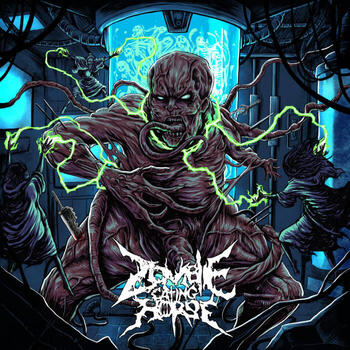 Orlando Garcia's wrists are actually quite relaxed. They just don't sound that way, because Lond is a pounder. Listening to him makes you want to throw a slab of cheap chuck between his sticks and his snare head, which he has loosened so it sounds like a war tom. Lond could tenderize that meat in seconds.
Lond, at first the guitarist of Zombie Eating Horse, is also a composer of great originality and variety, mixing up hand beats and foot beats (and even a tiny upside-down cymbal), fast and slow in the same song. Such frameworks make strong racks on which a guitarist can hang nasty riffs and dissonant stings -- although a certain Julian currently holds that role, it's a tribute to Lond's vision that the ZEH sound has remained consistent for over a decade of guitar and bass switch-ups.
Even wordless, Zombie Eating Horse would be music of discontent. But add the roaring despair of vocalist and old friend Jon -- "May the bridges I burn light the way out" -- and it becomes hard to imagine whether feelings or sounds came first; they all speak together.
The beats aren't the only places where surprises keep cropping up: You might hear a pure vocal harmony out of nowhere, or an old-fashioned high-tech guitar solo, or a noise collage. You notice a 13-minute track? It might contain a false ending, or three individual songs. Trip through Zombie Eating Horse's whole catalog; these dudes have fun.
Zombie Eating Horse make metal like no one else's. They come from Whittier by way of Montebello. They played Ozzfest Meets Knotfest in 2017. Their latest single, "Old Monster," came out last Halloween. Their name means whatever you want it to. For other questions, consult the music.
Orlando Garcia's wrists are actually quite relaxed. They just don't sound that way, because Lond is a pounder. Listening to him makes you want to throw a slab of cheap chuck between his sticks and his snare head, which he has loosened so it sounds like a war tom. Lond could tenderize that meat in seconds.
Lond, at first the guitarist of Zombie Eating Horse, is also a composer of great originality and variety, mixing up hand beats and foot beats (and even a tiny upside-down cymbal), fast and slow in the same song. Such frameworks make strong racks on which a guitarist can hang nasty riffs and dissonant stings -- although a certain Julian currently holds that role, it's a tribute to Lond's vision that the ZEH sound has remained consistent for over a decade of guitar and bass switch-ups.
Even wordless, Zombie Eating Horse would be music of discontent. But add the roaring despair of vocalist and old friend Jon -- "May the bridges I burn light the way out" -- and it becomes hard to imagine whether feelings or sounds came first; they all speak together.
The beats aren't the only places where surprises keep cropping up: You might hear a pure vocal harmony out of nowhere, or an old-fashioned high-tech guitar solo, or a noise collage. You notice a 13-minute track? It might contain a false ending, or three individual songs. Trip through Zombie Eating Horse's whole catalog; these dudes have fun.
Zombie Eating Horse make metal like no one else's. They come from Whittier by way of Montebello. They played Ozzfest Meets Knotfest in 2017. Their latest single, "Old Monster," came out last Halloween. Their name means whatever you want it to. For other questions, consult the music.
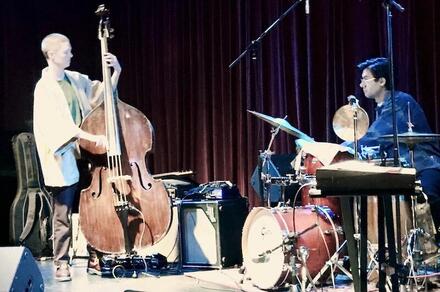 A meditative evening that opened holes in the sky.
Anna Butterss & Ben Lumsdaine looked like monastics -- she shorn and erect in baggy togs beside her bass, he neat and bespectacled behind his drums. And the two longtime collaborators followed through with understated grooves designed to level out the twitches of our overstimulated minds. As Lumsdaine laid down steady midtempo beats, occasionally flavoring them with a brief counterrhythm or an electronic enhancement, Butterss confined her long fingers mostly to perfect back-and-forths among a few low notes, acting the role of humble comforter. In this she resembled Jimmy Garrison in John Coltrane's mid-'60s quartet, except here the bass carried the foreground and the rhythm pulled simpler. During one span, Butterss varied her sound with a paper diaphragm behind her strings, producing an African percussive effect. Mostly serious, she smiled when the interaction hit an especially satisfying bend in roads whose scenery varied just enough. The duo closed uptempo, with Butterss roaming confidently up the neck. The capacity front-room crowd stood rapt throughout, heads nodding.
Chicago drummer Jeremy Cunningham released "The Weather Up There" at the start of the pandemic. He made it as a way of working through a family tragedy, and he didn't want it forgotten. Two of the exceptional musicians who abetted this exceptional recording were onstage this night.
Cunningham drove the subtly melodic compositions from behind his small kit, first as a slogging two-fisted sloth, then tightening up into a fusion powerhouse, but always delivering essential human feel. On keyboard and an age-delacquered alto sax that seemed to vibrate in the stage lights, Josh Johnson applied his rainbow-nailed fingers to solos divided between melody and adventurous improvisation; his green-hosed shoeless feet, meanwhile, stroked an infinity of effects from 15 (fifteen) effects pedals. Just as formidable, guitarist Jeff Parker slouched next to sheet music and provided his own orchestra: clean long jazz solos, distorted metallic explosions, softly percussive string pats, lush chords, and electronic colorations (one extension of a single concluding note was pure wizardry). Tall electric bassist Paul Bryan plucked it funky, the anchor in the gale.
The fascination never flagged; the sound sparked, surged and saturated. Cunningham's group gripped us with music, while also affecting us in unconscious ways (and those ways are the best).
A meditative evening that opened holes in the sky.
Anna Butterss & Ben Lumsdaine looked like monastics -- she shorn and erect in baggy togs beside her bass, he neat and bespectacled behind his drums. And the two longtime collaborators followed through with understated grooves designed to level out the twitches of our overstimulated minds. As Lumsdaine laid down steady midtempo beats, occasionally flavoring them with a brief counterrhythm or an electronic enhancement, Butterss confined her long fingers mostly to perfect back-and-forths among a few low notes, acting the role of humble comforter. In this she resembled Jimmy Garrison in John Coltrane's mid-'60s quartet, except here the bass carried the foreground and the rhythm pulled simpler. During one span, Butterss varied her sound with a paper diaphragm behind her strings, producing an African percussive effect. Mostly serious, she smiled when the interaction hit an especially satisfying bend in roads whose scenery varied just enough. The duo closed uptempo, with Butterss roaming confidently up the neck. The capacity front-room crowd stood rapt throughout, heads nodding.
Chicago drummer Jeremy Cunningham released "The Weather Up There" at the start of the pandemic. He made it as a way of working through a family tragedy, and he didn't want it forgotten. Two of the exceptional musicians who abetted this exceptional recording were onstage this night.
Cunningham drove the subtly melodic compositions from behind his small kit, first as a slogging two-fisted sloth, then tightening up into a fusion powerhouse, but always delivering essential human feel. On keyboard and an age-delacquered alto sax that seemed to vibrate in the stage lights, Josh Johnson applied his rainbow-nailed fingers to solos divided between melody and adventurous improvisation; his green-hosed shoeless feet, meanwhile, stroked an infinity of effects from 15 (fifteen) effects pedals. Just as formidable, guitarist Jeff Parker slouched next to sheet music and provided his own orchestra: clean long jazz solos, distorted metallic explosions, softly percussive string pats, lush chords, and electronic colorations (one extension of a single concluding note was pure wizardry). Tall electric bassist Paul Bryan plucked it funky, the anchor in the gale.
The fascination never flagged; the sound sparked, surged and saturated. Cunningham's group gripped us with music, while also affecting us in unconscious ways (and those ways are the best).
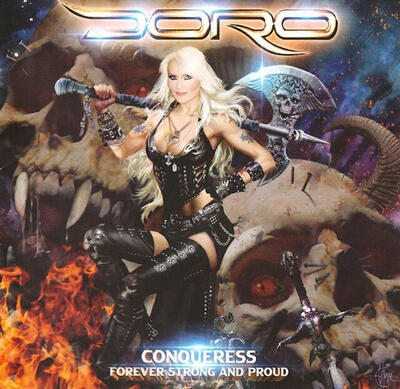 We asked some tough questions of the German metal queen Doro Pesch and answered them via AI.
* * *
MJ: The leadoff tune has good heft and hooks. Why are we/you the "Children of the Dawn"?
SubstiDoro: Because even though we're veteran metal warriors, we feel like we're just getting started. This should be obvious. Do you wish to taste my steel?
MJ: I hesitate to ask, but given the whole Dawn thing, if you were going to team up with Rob Halford and wanted to do a Judas Priest Song, why did you pick "Living After Midnight"?
SD: What part of "rocking to the dawn, loving to the morning" do you not understand?
MJ: Well, you also did a duet with Halford on the Jim Steinman song "Total Eclipse of the Heart," which was a hit for Bonnie Tyler in 1983. It's a fantastic performance, and you two made an even more over-the-top video for it, with Halford shooting lasers out of his fingernails. But don't the "total eclipse" thing and the bits about being "always in the dark" contradict the "dawn" metaphor and your consistent message about strength?
SD: Let me femsplain it to you. Our duet version of "Total Eclipse" brings out the inner conflicts you'll find in many Steinman songs. In this one, someone is having the kind of doubts we all do, but reaches out to that one true love, and "We'll never be wrong together." My fans and Rob's know who we're talking to.
MJ: Your fans certainly know what to expect from you, which is straight-ahead rocking metal and emotional rock balladry, of the kind you've even explored with Lemmy Kilmister of Motorhead. Most of "Conqueress" does not stray from those paths, with "Love Breaks Chains," written with Zoe-Nova Bruhn, standing as a breakout example of dynamic songcraft and guitar-vocal conversation.
SD: (sounding suspicious) Danke.
MJ: You wait until the end for "Total Eclipse," and right before that, "Heavenly Creatures," a whole different kind of rock melody within a structure that even modulates at the fade; you wrote it with Henry Staroste, keyboardist in your former band Warlock. Being about animals, it even has outlier subject matter. The expanded version of "Conqueress," which comes out a month from now, includes a 7-minute cover of Metallica's prog-thrash classic "The Four Horsemen." Are you thinking about changes in direction?
SD: In metal, we are all brothers and sisters.
MJ: And conquerors. The cover of "Conqueress" features skulls that look like the Danzig symbol. Do you want to conquer demons?
SD: Demons can be enemies or allies. And there are some who are only pests.
We asked some tough questions of the German metal queen Doro Pesch and answered them via AI.
* * *
MJ: The leadoff tune has good heft and hooks. Why are we/you the "Children of the Dawn"?
SubstiDoro: Because even though we're veteran metal warriors, we feel like we're just getting started. This should be obvious. Do you wish to taste my steel?
MJ: I hesitate to ask, but given the whole Dawn thing, if you were going to team up with Rob Halford and wanted to do a Judas Priest Song, why did you pick "Living After Midnight"?
SD: What part of "rocking to the dawn, loving to the morning" do you not understand?
MJ: Well, you also did a duet with Halford on the Jim Steinman song "Total Eclipse of the Heart," which was a hit for Bonnie Tyler in 1983. It's a fantastic performance, and you two made an even more over-the-top video for it, with Halford shooting lasers out of his fingernails. But don't the "total eclipse" thing and the bits about being "always in the dark" contradict the "dawn" metaphor and your consistent message about strength?
SD: Let me femsplain it to you. Our duet version of "Total Eclipse" brings out the inner conflicts you'll find in many Steinman songs. In this one, someone is having the kind of doubts we all do, but reaches out to that one true love, and "We'll never be wrong together." My fans and Rob's know who we're talking to.
MJ: Your fans certainly know what to expect from you, which is straight-ahead rocking metal and emotional rock balladry, of the kind you've even explored with Lemmy Kilmister of Motorhead. Most of "Conqueress" does not stray from those paths, with "Love Breaks Chains," written with Zoe-Nova Bruhn, standing as a breakout example of dynamic songcraft and guitar-vocal conversation.
SD: (sounding suspicious) Danke.
MJ: You wait until the end for "Total Eclipse," and right before that, "Heavenly Creatures," a whole different kind of rock melody within a structure that even modulates at the fade; you wrote it with Henry Staroste, keyboardist in your former band Warlock. Being about animals, it even has outlier subject matter. The expanded version of "Conqueress," which comes out a month from now, includes a 7-minute cover of Metallica's prog-thrash classic "The Four Horsemen." Are you thinking about changes in direction?
SD: In metal, we are all brothers and sisters.
MJ: And conquerors. The cover of "Conqueress" features skulls that look like the Danzig symbol. Do you want to conquer demons?
SD: Demons can be enemies or allies. And there are some who are only pests.